Google now refuses to run prediction market ads to residents of five US states: Connecticut, Michigan, Nevada, New York and Ohio. Each of those states has gone to court to stop event-contract platforms operating on its turf. That is an unusual position for a product its backers describe as federally regulated financial infrastructure, and it tells you something important before you read another word: the legal question here is not settled, and the marketing is running ahead of the law.
What is a prediction market, in plain terms?
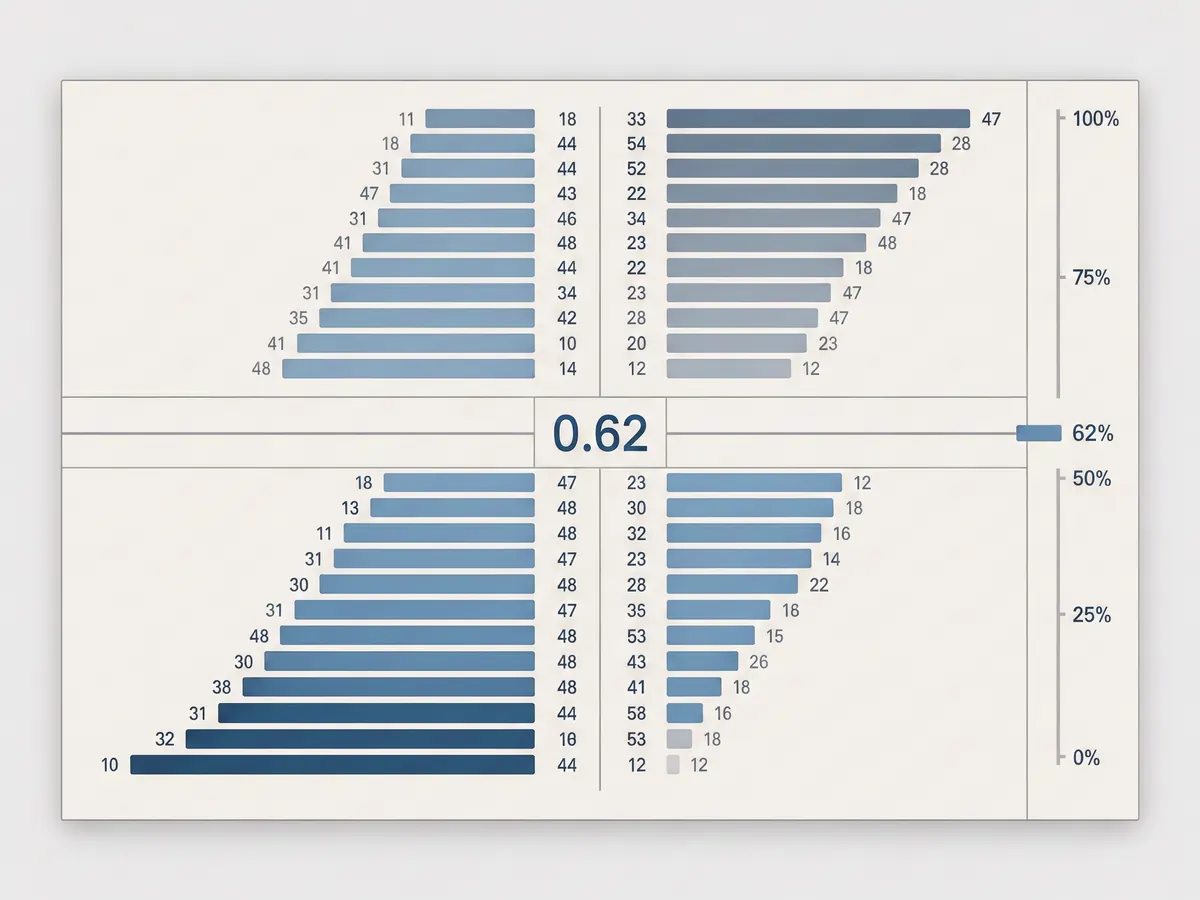
A prediction market is a venue where people buy and sell contracts on whether a real-world event will happen, and the contract’s price is the market’s implied probability of that event. Buy a contract at 62 cents and the market is collectively saying there is roughly a 62% chance the event occurs; if it does, the contract settles at $1, and if it doesn’t, it settles at zero.
That single mechanic is what separates prediction markets from the two formats most readers already know. You are not taking a price from a bookmaker, and you are not assembling a roster of players. You are holding a position in an outcome, and you can usually sell it before the outcome is known. Everything else in this guide follows from that.
How do prediction markets actually work?
The full cycle runs from listing to settlement in four steps.
- The platform lists a question with a clear, verifiable resolution, such as whether a named team wins a specific match or whether an economic figure exceeds a stated level.
- Traders post buy and sell orders. A contract trades anywhere between 0 and 100 (cents, or whatever the unit is), and that number is the price.
- You buy from another trader, or from a market maker providing quotes, rather than from a house that sets the line.
- When the event resolves, the winning side’s contracts pay the full unit value and the losing side’s go to zero. Positions sold before resolution are settled at whatever price the buyer paid.
What is an event contract?
An event contract is a binary instrument that pays a fixed amount if a defined event occurs and nothing if it doesn’t. “Binary” is the operative word. There is no partial credit, no push, no half-win. The contract either resolves yes or it resolves no, according to the resolution rules published when the market opened. Those rules matter more than beginners expect, because ambiguity about what counts as “yes” is where disputes happen.
How is the price linked to probability?
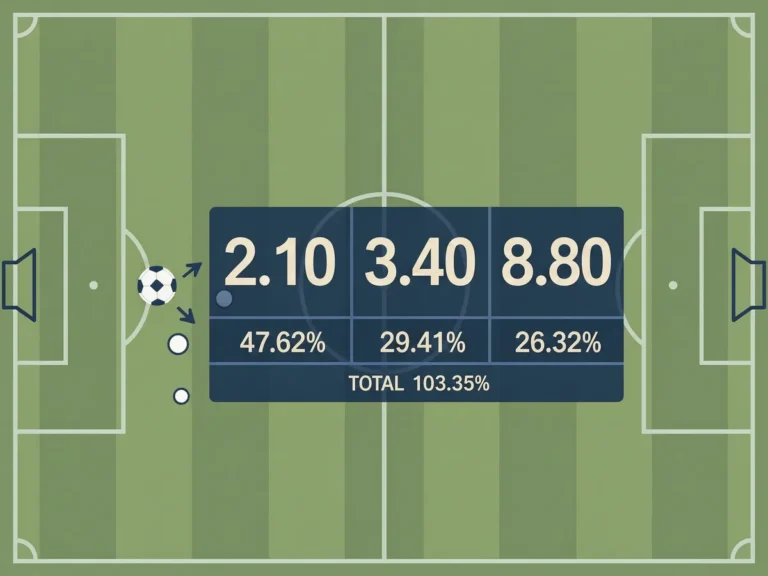
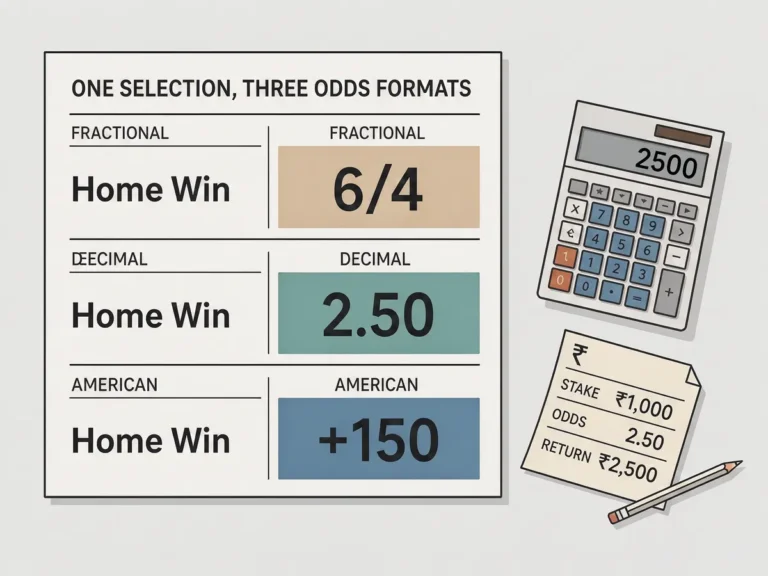
Price divided by the full settlement value gives the implied probability. A contract trading at 35 out of 100 implies a 35% chance. This is the same arithmetic as implied probability from decimal odds, where 1 divided by 2.50 gives 40%, with one difference that matters: a sportsbook’s quoted price has the operator’s margin baked into it, so the implied probabilities across a market add up to more than 100%. On an exchange-style prediction market, the yes and no sides should sit close to 100 combined, with the platform’s income coming from trading fees instead.
That is the theory, and it is where I would push back on the standard pitch. “No house edge” only holds when the market is liquid. In a thin market with two cents between the best bid and the best ask, plus a fee on each side, your real cost of entry can be worse than the margin on a mainstream sportsbook line. Check the spread before you believe the sales copy.
Prediction markets and sports betting are not the same transaction
They can produce an identical-looking result on your screen and still be mechanically different products.
| Feature | Prediction market | Sportsbook |
|---|---|---|
| Who sets the price | Traders, through an order book or a market maker | The bookmaker, adjusted for risk and volume |
| What you hold | A contract that settles at a fixed value or zero | A bet struck at fixed odds |
| Where the cost sits | Trading fees plus the bid-ask spread | Margin built into the odds |
| Counterparty | Other users on the same venue | The operator |
| Topics covered | Economics, elections, current events, sport | Sport, and in some markets politics or novelty bets |
| Exiting early | Sell the position at the current price | Wait for settlement, or accept a cash-out offer if the book provides one |
The exit point is the one casual users underrate. Selling a contract at 80 after buying at 50 locks in a result with the event still undecided, which changes how you think about a position. It also means you can lose money on a market you eventually called correctly, if you sell into a dip.
Why fantasy sports is a different product entirely
Fantasy sports scores the statistical performance of real athletes across a roster you selected, and ranks you against other entrants. Prediction markets have no roster, no scoring system and no contest field. You trade a single yes-or-no proposition about something that either happens or doesn’t.
The confusion is understandable, partly because some of the companies involved sit in both camps. Underdog, a fantasy sports operator, has been offering sports-event contracts and now faces state pushback over exactly that overlap. For a user, picking a player prop and buying an event contract can feel like the same five seconds of activity. Structurally, they are unrelated: one is a skill-framed contest product, the other is a financial instrument.
Why prediction markets are suddenly everywhere
Three things are happening at once. Exchange-style platforms such as Kalshi have expanded their listings well beyond economics into sport and current events. Operators from adjacent industries, including fantasy sports companies and crypto firms, are filing to enter the category. And a run of litigation has made the whole thing newsworthy: Underdog has sued seven states that tried to stop it offering sports-event contracts, including Tennessee, where it filed suit after receiving a cease-and-desist order and a warning that its fantasy sports licence could be revoked.
Underdog’s argument is that Commodity Futures Trading Commission oversight pre-empts state gambling law. States disagree, and until courts rule, both positions are live. Because this story moves weekly, treat any specific claim you read, including the figures above, as something to re-check against the primary source before acting on it. The deeper regulatory dispute between gaming regulators and prediction market operators”>dispute between state and tribal gaming regulators and prediction market operators is worth understanding on its own terms.
What “regulated” actually means in this context
Regulated means a named authority has authorised the venue, holds it to capital, surveillance and segregation-of-funds standards, and gives you a formal complaints route. In the US that authority is the CFTC, which oversees designated contract markets and the exchanges operating under its rules.
Compare that to an offshore or informal platform that names no regulator, publishes no licence number, and resolves disputes through its own support desk. If a resolution goes against you there, you have no appeal. This is the single thing I would not compromise on: if a platform cannot tell you which regulator supervises it and under what licence, I would not fund an account, however good the interface looks.
One more trap. Federal regulation in the United States says nothing about whether you are permitted to trade. Google’s own advertising policy for this category requires that the advertiser hold all applicable local financial, commodity or gaming licences and that the targeted location be eligible, which is a tidy summary of the condition most newcomers skip: supervision of the venue and legality in your jurisdiction are two separate checks.
Where Indian users stand
Unsettled, and nobody should pretend otherwise. Indian betting and gambling law is largely a state subject built on a framework that predates the internet, and its central distinction is between games of skill and games of chance. Event contracts were not contemplated when any of it was drafted. No Indian regulator currently authorises prediction market exchanges, and the major international platforms typically restrict access by jurisdiction in their own terms.
So the honest answer to “is trading on a prediction market gambling in India?” is that no authority has definitively classified it, and arguing it is a financial instrument rather than a wager is a legal position, not a settled fact. Check your state’s current rules and the platform’s terms of service before you participate, and do not read a US regulatory badge as clearance to trade from India. If you are still getting to grips with the basics, our guide to how betting works, including odds, stakes and India’s legal rules”>how betting and odds work in India covers the ground underneath this one. Winnings from online gaming are taxable in India and subject to TDS on net winnings; treat that as general information and speak to a tax professional about your own position.
The risks that don’t appear in the marketing
A contract can go to zero, in full, and frequently does. That is the design, not a malfunction. Beyond the obvious:
- Thin liquidity widens spreads, so entering and exiting a niche market costs more than the headline fee suggests.
- Resolution ambiguity can turn a position you thought was winning into a disputed one.
- Unregulated platforms offer no independent recourse if funds or settlements are withheld.
- Access can be withdrawn mid-position if a jurisdiction moves against a platform, as the state-level actions in the US show.
Treat anything you put in as money you can afford to lose entirely, set a budget before you open an account rather than after, and stop if you find yourself increasing stakes to recover losses. No market structure, exchange-based or otherwise, removes the risk of loss.
Four checks before you fund an account
- Find the named regulator and licence on the platform’s own site. If it isn’t there, that is your answer.
- Read the fee schedule and then look at a live order book. Compare the spread on the specific market you care about, not the busiest one on the homepage.
- Confirm the legal position where you actually live, and whether the terms of service permit residents of your country to trade at all.
- Test the withdrawal path, including KYC requirements and timelines, before you have a balance you need back.
Run those four and most of the noise falls away. What remains is the question courts in several jurisdictions are currently chewing on, and the one no explainer can resolve for you: whether an event contract on a football match is a financial instrument or a bet in a nicer wrapper. Until someone with authority answers it, you are trading in a category whose rules may change around you.
About The Author