Resorts World’s arena pitch, and what it actually tells bettors
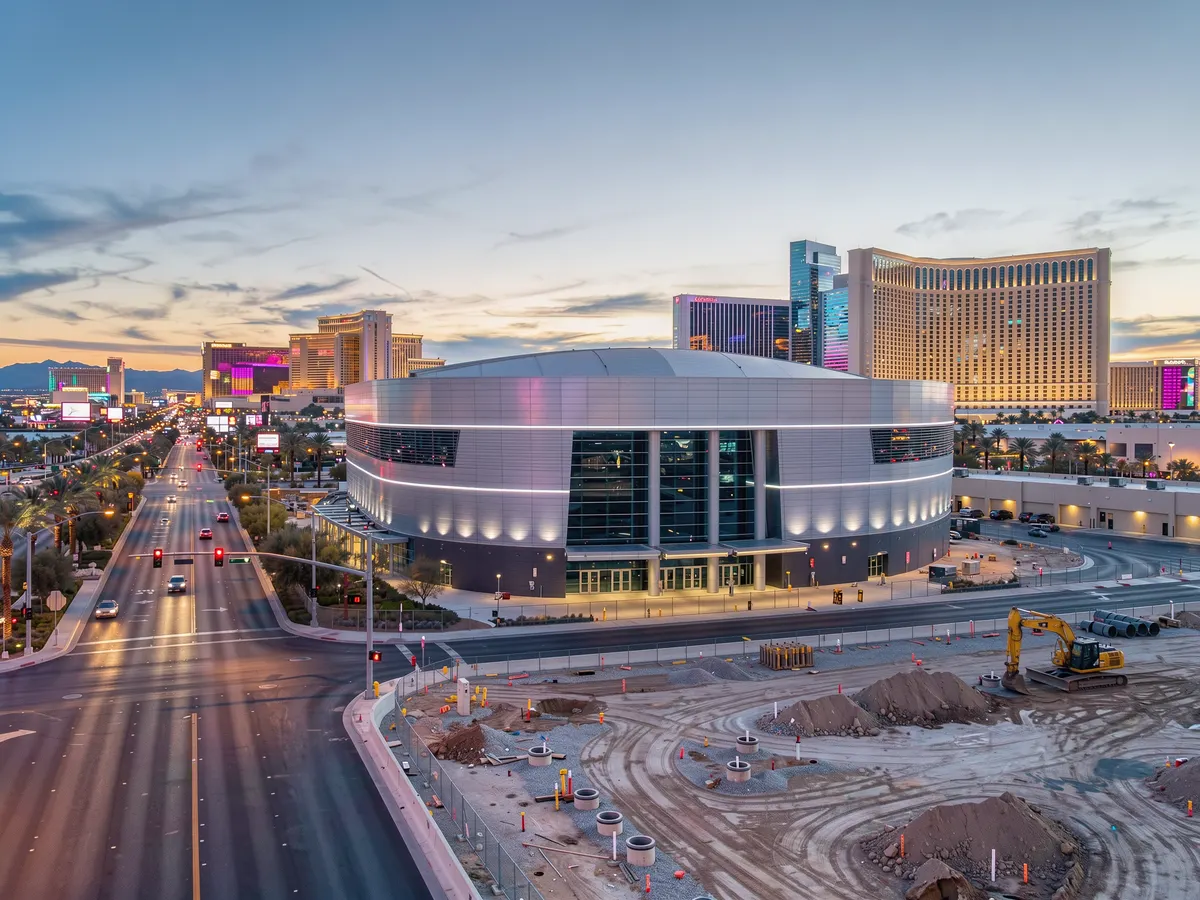
NBA betting trends are the shifts in where, how and when money moves on basketball markets. The loudest one this autumn has nothing to do with basketball: it is a land pitch on the North Strip. Casino.org reports that Resorts World’s president and chief financial officer, Carlos Castro, is positioning the property’s 42 undeveloped acres as the most turnkey site on the Strip for a future Las Vegas NBA arena. The takeaway for bettors is not that a team is coming. It is that casino operators now compete for proximity to live sports fandom the way they once competed for headline residencies, because the people who fill an arena are the people who fill a sportsbook.
What Resorts World is claiming, and the qualifier buried under it
Castro told the Las Vegas Review-Journal, as relayed by casino.org, that “the North Strip is where the next chapter of Las Vegas is being written, and we believe strongly that an NBA arena belongs here.” The supporting case is infrastructure: a $4.3 billion integrated resort already operating, parking, utilities and access roads in place, Strip frontage plus back access via Sammy Davis Jr. Drive, and 42 acres that need no multi-year land assembly. Castro also points to the emerging luxury corridor anchored by Resorts World, Wynn and Fontainebleau, and to the 41 regular-season home dates an arena would bring alongside concerts and combat sports.
That number, 41 home dates, is the advertised figure. The qualifier arrives two paragraphs later in the same report: Resorts World does not get to choose. Casino.org notes the NBA shortlisted three ownership groups in September, led respectively by Nancy Walton Laurie and Bill Laurie, by Bill Foley and Jerry Colangelo, and by Marc Lasry and Steve Apostolopoulos. The venue follows the owner, and none of the three has stated a public preference. Bill Foley was initially linked to T-Mobile Arena, home of his Golden Knights, but after partnering with Colangelo’s Las Vegas Jacks group, the combined bid is reported to be planning a new build instead. The league has said it wants expansion settled by the end of the year, with Las Vegas and Seattle franchises targeting launches as early as the 2028-29 season, and some reports still floating 2029-30 for Vegas.
So this is a pitch made into a vacuum, which is exactly why it was made publicly. Casino.org has tracked at least seven proposed Vegas NBA arena sites over recent years, most of them not serious. Going on the record is how a property gets onto the short list of sites the eventual owner actually tours.
Why a casino wants an NBA team next door
Because an arena is a demand machine that runs on a schedule. Forty-one guaranteed home dates, plus concerts and fights, is forty-one nights of hotel occupancy, restaurant covers and bar spend that a resort does not have to market from scratch. The casino floor and the sportsbook sit at the end of that funnel.
How arena proximity feeds retail sportsbook traffic
Retail sportsbooks live on dwell time. A bettor who walks five minutes from a game to a book with seats, screens and a drink in hand is a bettor who stays for the late West Coast slate. Mobile apps capture the wager wherever the phone is, but the retail room captures the afternoon, and the afternoon is where a resort monetises everything that is not the bet itself. That is the business logic, and it is ordinary rather than secret. If you want the scale of it, Nevada’s monthly sports betting handle is published by the Nevada Gaming Control Board, and state regulators elsewhere publish comparable figures. Check those rather than any operator’s own framing.
Arenas and sportsbooks are converging, slower than the press releases suggest
Across US leagues, sportsbook brands have bought naming rights, lounge space and official-partner status at and around major venues, and some arenas have added betting lounges or in-arena betting where state law allows it. That is the documented direction of travel. The part the sector tends to skip is how uneven it is: in-arena wagering depends entirely on each state’s rules, league agreements set limits on what can be promoted and when, and several high-profile venue deals are hospitality branding rather than a licence to take bets on site. Treat any claim about a specific arena’s betting facilities as something to verify against that operator’s licence conditions, not as a given.
The convergence that matters more to a bettor is quieter. It shows up in the shift from betting as a pre-game ritual to betting as something done during the broadcast, on a phone, in a room full of people watching the same possession.
In-play betting is where this season’s growth is
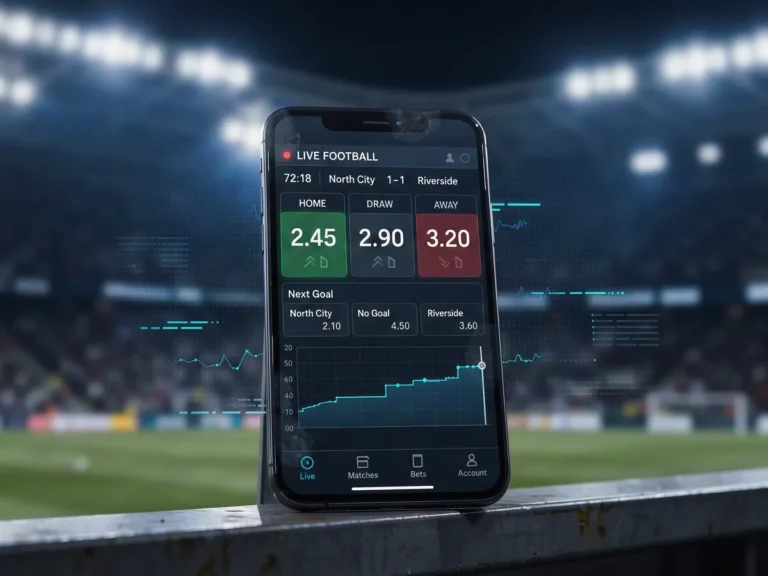
In-play betting, also called live betting, is wagering on a game after tip-off at odds that update continuously as the score, clock, foul count and injury situation change. Markets include the live spread and moneyline, adjusted totals, and micro-markets on the next possession or the result of a quarter.
It is gaining share for mechanical reasons rather than fashionable ones. Data feeds are faster, pricing engines recalculate within seconds, and most new accounts are mobile-first, which means the wager and the broadcast happen on the same screen. Basketball suits it better than almost any sport: possessions are frequent, scoring is near-continuous, and the probability of a result genuinely moves every thirty seconds.
How live odds move during a game
A pricing model holds a running estimate of each team’s win probability and converts it into a price. A 10-0 run, a starter picking up a fourth foul, or two minutes of clock burned with a lead all shift that estimate, and the price follows. Markets suspend briefly at free throws and stoppages so the book is not pricing a known outcome. The trade-off is the one nobody advertises: in-play markets generally carry a wider margin than the same pre-game market, because the book is pricing faster and accepting more uncertainty. You pay for the convenience of betting with information you did not have at tip-off.
The basketball odds and markets to watch
Five market types will account for most of what you see this season, and each reacts to different news.
| Market | What you are betting | What moves it |
|---|---|---|
| Point spread | Margin of victory against a handicap | Injuries, rest days, lineup news |
| Moneyline | Straight winner | Same as spread, amplified on short prices |
| Totals | Combined points over or under | Pace, defensive personnel, back-to-backs |
| Player props | An individual’s points, rebounds, assists | Minutes projections, matchup, usage |
| Futures | Season-long outcomes such as titles and awards | Trades, long-term injuries, narrative |
Here is where the arena story touches the board, and it is a narrow touch. Expansion news moves futures markets for cities and franchises that do not yet exist in any meaningful way, and it moves attention more than it moves price. A relocation or venue announcement can nudge sentiment around a club, and sentiment pulls recreational money, which pulls a line. What it does not do is change the probability of a game tipping off tonight. If you find yourself adjusting a side because of a press statement about 42 acres, you have confused news with information. If the basic vocabulary here is new, start with a plain explainer on odds, stakes and how wagers work before chasing live markets.
More books and more venues does not mean better odds of winning
Competition between Vegas sportsbooks and national apps does one useful thing for bettors: it tightens prices. A two-way NBA market priced at -110 both sides implies about 52.4% for each outcome, 104.8% in total, which leaves the book roughly a 4.5% theoretical hold on balanced action. Sharper competition pushes some markets closer to fair, and shopping two or three books on the same spread is the only genuinely free improvement available to you. But the margin never goes to zero, and a resort winning an arena bid does nothing to your win rate.
So the honest position: watch in-play pricing and line shopping, ignore the real estate. And treat the volume that arena integration is designed to produce as a reason to set your own limits rather than a sign the market has got friendlier, since the research on how easily frequent online betting shifts from entertainment into a problem is worth reading before a long season of nightly slates. Deposit limits, session caps and cool-off tools exist in every licensed app.
What stays unresolved is the thing everyone reports as settled. The NBA has not picked an owner, the owner picks the venue, and the earliest tip-off anyone is quoting is three seasons away with a later date still in play. Resorts World made a claim about land. Everything else is a projection.
About The Author