Is a prediction market just a sportsbook wearing a trading app’s clothes? Mostly no, and the gap between the two explains both the headline and the backlash. Prediction markets betting crossed $10 billion in notional trading volume over a single weekend, with TickerTracker logging $10.4 billion across tracked platforms (an 11% rise on the previous weekend) and DefiRate putting the figure at roughly $10.5 billion. Kalshi and Polymarket combined reported a two-day trading volume of $8.56 billion. Meanwhile a Reuters/Ipsos poll found widespread public opposition to betting on elections, military action and government decisions.
The popular read on this is that prediction markets are now genuine competition for regulated sportsbooks. That read is correct. The usual reason given for it, that America has gone mad for election betting, is not. The reporting is explicit that combination contracts, not politics, are driving the volume surge. Elections generate the political heat. Sports generate the money.
An event contract is a share, not a price
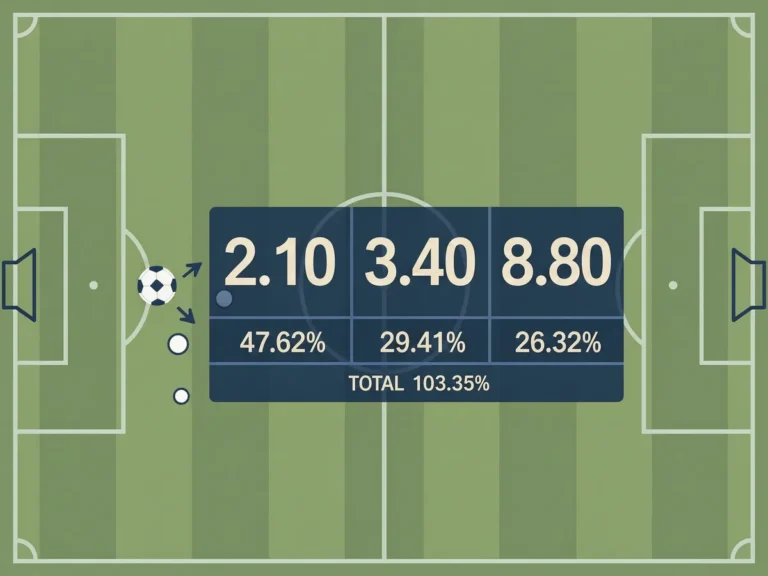
A prediction market is an exchange where you buy and sell contracts on whether a specific event happens, with each contract settling at $1 if it does and $0 if it does not. Buy a contract at 40 cents and you have risked 40 cents to win 60. The price itself is the market’s implied probability: 40 cents equals a 40% chance.
Odds versus shares: the practical difference
With fixed-odds betting you accept a price from a bookmaker and that price is locked for your stake. The operator sets it, carries the risk, and builds its margin into the number. Two sides of a market at -110 each imply a book totalling about 104.8%, which is how the bookmaker holds roughly 4.5% of everything staked whatever the result.
On an exchange you trade against other participants. Nobody guarantees you a price; you are matched against whoever is willing to take the other side, and you can sell your position back into the market before the event resolves. If your contract moves from 40 cents to 65 cents, you can take 25 cents a share and walk away with no interest in the outcome. A settled sports bet offers no equivalent exit unless the operator chooses to offer a cash-out, priced on its own terms.
That single feature, the ability to exit, is the real distinction. It makes these instruments behave like securities and it is why they ended up in front of a financial regulator rather than a gaming commission.
How a weekend reached $10 billion
Three things stacked up at once: an election cycle pulling in media attention, combination contracts giving sports traders a parlay-style product, and a competitive market of well-capitalised platforms spending to acquire users. Macquarie, per the same reporting, sees considerably more room for growth this year.
Now the qualifier that almost never travels with the headline. That $10.4 billion is notional volume, meaning the face value of contracts changing hands, not the money traders put up. A contract priced at 40 cents carries $1 of notional value, so a single weekend’s notional figure represents a materially smaller amount of actual capital at risk. Contracts also change hands repeatedly before settlement, and each pass counts again. None of that makes the growth fake. It does mean you cannot line $10 billion of notional volume up against a sportsbook’s handle, let alone its revenue, and conclude anything useful. Different measure, different denominator.
Kalshi, Polymarket and the exchange model
Kalshi is a US event-contract exchange regulated by the Commodity Futures Trading Commission, which lists binary contracts on economic, political, sporting and cultural outcomes. It dominated the record weekend. Polymarket is the other name that appears consistently alongside it in the same coverage.
The operative word is exchange. A CFTC-designated contract market sits under federal commodities rules: contract specifications, settlement sources and market conduct obligations are filed with and overseen by the CFTC. That is a genuinely different supervisory regime from an offshore prediction site, which answers to nobody you can escalate to, and also different from a state-licensed sportsbook, which answers to a gaming regulator with its own rules on advertising, self-exclusion and dispute resolution.
Do not read “regulated” as “regulated the way you are used to.” Commodities oversight is built to protect market integrity and orderly trading. Consumer gambling protections, the deposit limits and cooling-off tools that a licensed sportsbook has to offer, are not the same statutory product.
Why election betting is the flashpoint
Public opinion is the problem, not volume. The Reuters/Ipsos poll found broad opposition to wagering on elections, military actions and government decisions, and that opposition is what gives state regulators and politicians their mandate to push back. Google has already restricted prediction market advertising in Connecticut.
The case against is mostly about perception and incentive. Critics argue that a liquid market on who wins an election creates a financial constituency for election outcomes, invites bad-faith narratives about rigging, and normalises treating governance as a betting line. The case in favour is that these markets aggregate information, have historically been used by researchers as a forecasting tool, and that a federally supervised venue is preferable to the offshore books where this activity already happened.
Both arguments are coherent. What the poll establishes is that the public has not been persuaded by the second one, and in gambling policy, public sentiment tends to arrive before legislation does.
Are prediction markets actually regulated?
They are regulated federally as event contracts and contested at state level as gambling, and that conflict is live in court. Kalshi’s litigation, and that of similar plaintiffs, rests on federal preemption arguments tied to CFTC regulation of event contracts generally rather than on any pending rule: the CFTC withdrew its 2024 Notice of Proposed Rulemaking in February 2026, so there is no current regulatory proposal to cite. The states’ position is that a contract on who wins a game or an election is a bet, and that betting is theirs to license. The platforms’ position is that these are commodities contracts on a federally designated exchange and that federal law pre-empts state gambling statutes.
Nobody should tell you this is settled. The honest statement is that the federal pathway exists, the state challenges are ongoing, and the availability of these markets where you live could change on a court ruling or a rule-making you had no reason to be watching. Treat any “it’s legal everywhere” claim with suspicion, including from a platform.
Where prediction markets betting gets risky
Liquidity and pricing risk
On a thin market the quoted price is close to meaningless. If the gap between the best bid and the best offer is wide, you pay that spread to get in and again to get out, and that cost is invisible in the way a bookmaker’s overround at least is not. Headline volume concentrates in a handful of popular contracts; the obscure market you actually want may have almost nobody in it. Thin books are also where manipulation concerns are most credible, because moving a price costs very little when there is little depth behind it.
Exchanges typically charge explicit trading fees rather than embedding a margin in the price. Explicit is not the same as cheap. Check the fee schedule for the specific contract before you assume you are beating the vig.
Legal and settlement uncertainty
Two exposures sit outside the market itself. The first is jurisdictional: access can be withdrawn in your state. The second is resolution. Every contract settles against a defined source, and ambiguous real-world events produce disputes about what that source said. Read the settlement terms, particularly on anything political, before you take a position you cannot exit.
This is speculation with a negative expected return for most participants after costs, not a savings product. Stake only money you can afford to lose entirely, set a limit before you open the app, and stop if the position sizes start tracking your emotions rather than your view. If betting has stopped being discretionary spending, step away and use a support service.
Side by side with a traditional sportsbook
| Feature | Prediction market | Fixed-odds sportsbook |
|---|---|---|
| What you hold | A contract settling at $1 or $0 | A bet slip at a locked price |
| Who sets the price | Other traders, via the order book | The operator |
| Where the margin sits | Explicit trading fees plus the bid-offer spread | Built into the odds as overround (around 4.5% hold on a -110 two-way market) |
| Exit before the event | Yes, sell into the market at the current price | Only if the operator offers cash-out, on its terms |
| Primary US regulator | CFTC, as event contracts, with state challenges pending | State gaming regulators under state licences |
| Settlement | Against a pre-specified data source in the contract terms | Against the operator’s published rules and official result |
| Liquidity | Varies sharply by contract; thin books carry real cost | Operator always quotes a price up to its limits |
What the milestone actually tells you
It tells you the exchange model works at scale and that a federal route into American betting now exists outside the state licensing system that took a decade to build. That is the structural story, and it is why incumbent operators and state regulators are both paying attention.
What it does not tell you is whether the current arrangement survives. The same weekend produced a record volume figure and polling showing the public does not want elections traded. Those two facts cannot both keep winning. Either the platforms narrow what they list, or the courts settle federal pre-emption in a way that overrides the state objections, or legislators write something new. For anyone trading these contracts, the practical takeaway is narrower than the headline: understand what notional volume measures, read the settlement terms, check the depth of the book you are entering, and assume the legal ground under the product can still move.
About The Author