Six days to reopen, and a concrete barrier after that
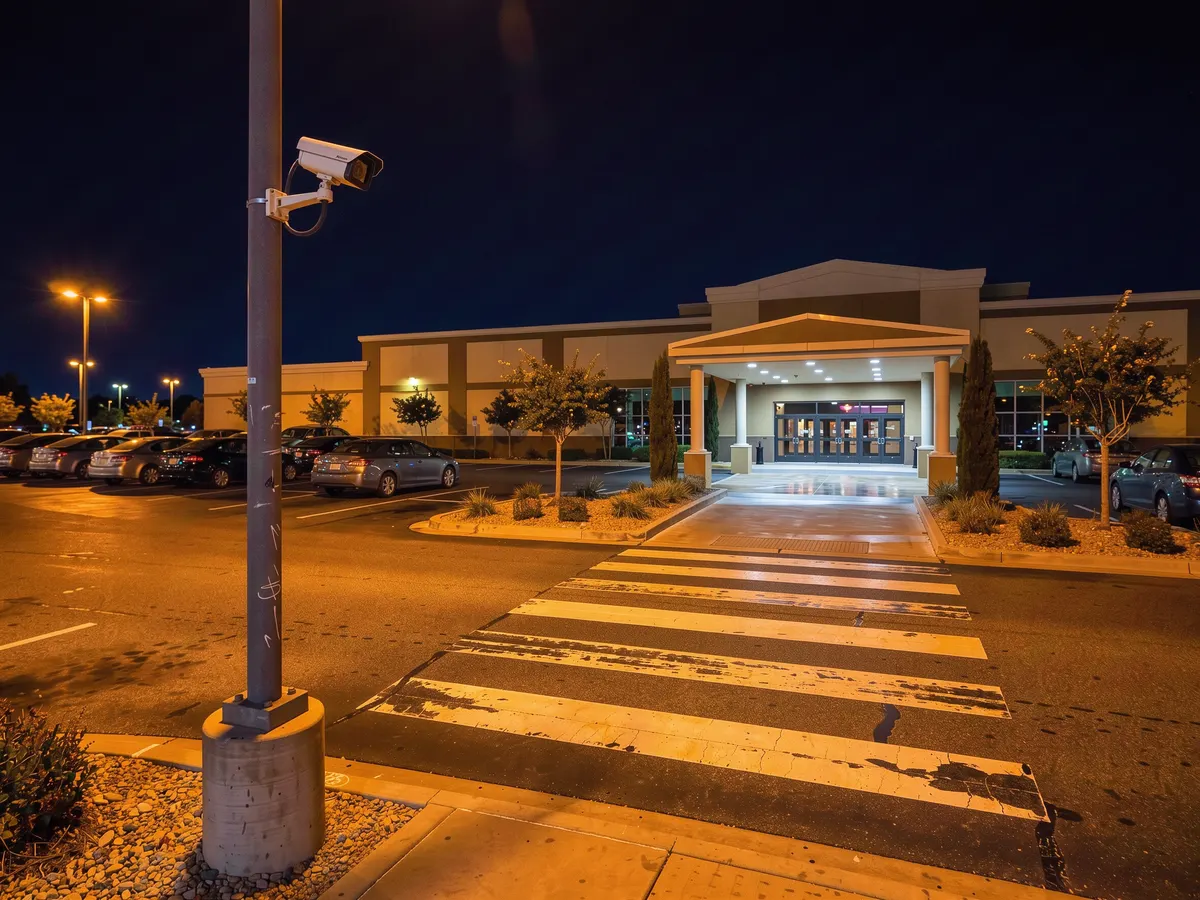
Kickapoo Lucky Eagle Casino in Eagle Pass, Texas, reopened six days after a gunman shot seven people outside one of its entrances. The concrete barrier went in later. That order of operations, reopen first and harden second, is the most honest thing you will ever read about casino security measures, because it is how almost every property in the industry would have handled the same week.
The case returned to the news because a court date now exists. Keryan Rashad Jones, 35, of San Antonio, is scheduled to stand trial on February 8 in Maverick County, roughly 17 months after the September 27, 2025 attack. He is charged with capital murder of multiple persons, murder, and aggravated assault with a deadly weapon, has pleaded not guilty, and remains in custody on $5.1 million bail. Prosecutors have said they will not seek the death penalty, which means a capital murder conviction in Texas carries a mandatory sentence of life without parole.
Two people were killed: Alicia “Daniela” Sanchez, 32, a mother of five from Carrizo Springs, who was walking to her vehicle with her partner, and Marcus “Mark” Antley, 66, a retired US Customs and Border Protection officer well known in Eagle Pass. Five others were wounded and taken to hospitals in Eagle Pass and San Antonio.
| Stage | When | Detail |
|---|---|---|
| Shooting outside casino entrance | September 27, 2025, shortly before midnight | Seven shot, two fatally, near a crosswalk by an entrance |
| Suspect apprehended | Following morning | Intercepted in Wilson County after a multiagency manhunt |
| Casino reopens | Six days later | Heightened security, concrete barrier installed subsequently |
| Arraignment | January | Not guilty plea entered by video link |
| Competency ruling | May | Judge Maribel Flores, 293rd District Court, found him competent; separate sanity evaluation ordered |
| Trial | February 8 | Maverick County |
The surveillance figure operators quote, and the word that quietly limits it
Casino surveillance coverage is close to total on the gaming floor and thins out fast beyond it. When an operator cites a camera count in the hundreds or thousands, read the next word carefully: it is almost always “the floor”, “the property” or “the gaming area”. Those are not the same thing as the crosswalk between an entrance and a parking row at 11:50pm on a Saturday.
There is a structural reason for that, and it is not negligence. The internal control standards that tribal and commercial operators are actually audited against were written to protect money and game integrity. Table layouts, the cage, the count room, slot drops, chip fills, employee movement around cash: those are the zones with prescribed, documented, inspectable camera coverage, because that is where a casino can be stolen from. Perimeter roads, bus lanes, surface lots and pedestrian crossings tend to sit in the discretionary tier, covered by whatever the property decided to buy.
So gambling venue surveillance is excellent at the thing it was designed for. It catches a dealer’s hand palming a chip and reconstructs a disputed baccarat round frame by frame. It was never designed as a public-safety net for the walk back to your car, and the regulatory framework does not require it to be one.
A Mercedes raffle is a crowd forecast, and security rarely gets the memo
The property was unusually busy that night because of a promotional raffle offering a Mercedes-Benz E350 and cash prizes. That detail should sit uncomfortably with anyone who works in operations, because a promotion of that size is a headcount prediction made weeks in advance. Marketing knows roughly how many extra cars will fill the lot and roughly when they will all leave, because the drawing time dictates it.
Properties that run big giveaways know exactly where their patrons are standing, right down to which bank of machines they carded into, and they have invested heavily in that visibility; the newest generation of casino loyalty kiosks that follow players around the property”>loyalty hardware exists to keep tracking a player away from the slot seat. The same forecast almost never drives perimeter staffing with equal precision. Floor supervision scales with the promotion. Exterior patrol, lighting checks and traffic control frequently do not, because the exterior belongs to facilities, not to gaming operations, and the two budgets rarely talk.
If you want one concrete, unglamorous fix out of this entire story, it is that: every promotional calendar entry should automatically generate an exterior coverage plan for the hour either side of the drawing. No new technology required.
Two defensible readings of that night
The first reading is that no realistic set of casino safety protocols stops what happened. An open-access venue on a public road cannot screen everyone who approaches a crosswalk, and a determined shooter arriving by vehicle at midnight defeats any plausible civilian security posture. On that view, the system that mattered was the response, and the response performed: a multiagency manhunt across southwest Texas, licence plate recognition used to track a black Nissan Frontier, and troopers intercepting the vehicle in Wilson County the next morning. From incident to arrest in hours.
The second reading is that the perimeter is precisely where a casino’s risk concentrates, and the industry has spent decades under-funding it relative to the floor. Late-night closing patterns, a cash-heavy clientele, alcohol, dense parking, long unlit walks, and promotions that synchronise thousands of departures into the same twenty minutes. Every one of those is a known variable, and none of them is a surprise.
I hold the second reading, while taking the first seriously. The argument that deterrence has hard limits is true and the response here was genuinely good. But notice what the property installed afterwards: a concrete barrier. A barrier is an answer to a vehicle threat, not to a firearm threat. It is useful, it is visible, and it is cheaper than the thing that would have mattered more, which is sustained human presence and lighting across the pedestrian routes at closing time. The gap between those two responses is the gap between reassuring patrons and protecting them, and it is worth naming out loud rather than letting a photograph of new bollards close the subject.
What land based casino security looks like from a patron’s side
The highest-risk minutes of a casino visit are usually the ones spent outside the building, which is the inverse of where most patrons think about safety. A few habits follow from that, and none of them require paranoia:
- Locate the exit nearest your seat when you sit down, not when you need it. Gaming floors are deliberately disorienting, with low sightlines and few windows.
- Ask for a security escort to your vehicle. Most staffed properties provide one on request, at any hour, and almost nobody uses it.
- Park under a light and near a camera rather than near the door. Proximity is worth less than visibility.
- Move cash off the property electronically where the venue allows it, rather than carrying a large cash-out across a dark lot.
- Treat the walk out as the end of the session. Phone away, keys in hand, no lingering by the car.
For readers who split their play between a local property and an online account, this is the trade worth understanding honestly. Online play removes the parking lot entirely and replaces it with a different set of risks around payments, account security and verification. A land-based venue hands you staffed floors, cameras everywhere the money is, and a defined exit route. What it also hands you is a crowded perimeter at midnight that nobody is contractually obliged to watch.
What the trial will not settle
A separate evaluation of the defendant’s sanity at the time of the alleged offences was ordered after he was found competent to stand trial, and that question remains open heading into February. The legal process will establish what happened and who is responsible for it. It will not produce a single line of amended control standards for exterior coverage, because that is not what criminal courts do, and single incidents have historically not moved minimum internal control standards in that direction either.
Which leaves the change, if there is one, in the hands of individual operators deciding how much perimeter they are willing to pay to watch. Properties that take the lesson seriously will tie exterior staffing to the promotional calendar and extend camera coverage past the point where the regulator stops checking. Properties that do not will install a barrier, photograph it, and wait.
About The Author