The public service spots began airing as the NBA season opened on October 20, slotted between the same broadcasts that carry sportsbook odds. The NBA and WNBA have partnered with the National Council on Problem Gambling (NCPG) on a joint responsible gambling campaign covering sports betting and prediction markets, running across league, team and partner channels through the season, according to casino.org. The single most useful line in the whole thing is one most fans will skim past: betting should be treated as entertainment rather than income regardless of how much you know about the sport.
That qualifier is the piece people forget to check, and it changes the answer to almost every question a bettor asks about their own habits.
A campaign that starts at tip-off, not after the damage
The initiative is a public service effort built around PSAs on linear television and digital platforms, with educational materials pointing fans toward national responsible gaming resources including helpline contacts and self-assessment tools. Its stated aim is to help fans understand the financial risks of putting money on sports outcomes, whether through a sportsbook or a prediction market.
The NBA framed it as informed decision-making. Scott Kaufman-Ross, the league’s head of media distribution and partnerships, said that as the ways people engage with sports evolve, fans need to understand the risks of putting money on outcomes, and that if they choose to bet or trade, they do so responsibly. Derek Longmeier, president of the NCPG Board of Directors, described awareness as an important first step in preventing gambling-related harm.
Why the WNBA’s involvement widens the reach
Putting the campaign in front of WNBA audiences matters because that audience is newer to large-scale betting markets and growing fast. Colie Edison, the WNBA’s chief growth officer, said bringing the campaign to WNBA viewers lets the league reach more fans with practical guidance on financial risk, setting limits and recognising where to find support. Newer markets tend to have thinner liquidity and wider prices, which is exactly where a confident fan with strong team knowledge is most likely to overestimate their edge.
The condition nobody checks: knowledge is not protection
Sports expertise does not remove the operator’s margin, and that is why the campaign repeats “regardless of sports knowledge.” Every two-way market is priced so the implied probabilities add up to more than 100%. You are not betting against your own judgement of the game; you are betting against your judgement plus that built-in cushion.
Here is what the cushion looks like at prices you will actually see on a basketball spread or a cricket match-winner market:
| Two-way market priced at | Implied probability per side | Total book | Operator margin |
|---|---|---|---|
| 1.95 / 1.95 | 51.3% | 102.6% | ~2.5% |
| 1.91 / 1.91 | 52.4% | 104.71% | ~4.7% |
| 1.83 / 1.83 | 54.6% | 109.29% | ~9.3% |
At 1.91 both ways, you need to be right more than 52% of the time just to break even. Knowing a team’s rotation patterns does not change that arithmetic, and the deeper into prop markets and in-play prices you go, the wider the margin usually gets. This is the honest frame: over time, the house holds an edge, and no amount of research converts betting into a reliable income.
Why sports betting risks are getting league airtime now
Legal sports wagering has expanded quickly, and the same leagues broadcasting these PSAs also hold commercial partnerships with sportsbooks. Prediction markets have added another route to putting money on outcomes, one many fans do not mentally file as gambling at all. That combination, more products plus more scrutiny of betting-related harm, is the context for a campaign arriving now rather than five years ago.
The tension is real and worth naming. A league that earns from betting partnerships is asking fans to bet less recklessly, and the NCPG itself maintains a neutral stance on legalised gambling while receiving funding from operators and industry stakeholders. I would not mistake a PSA campaign for consumer protection, and I would not wait for an operator or a league to tell me when I have bet too much. But the advice in it is correct, and dismissing correct advice because of who paid for the airtime costs you money, not them.
The core messages, decoded
- Treat it as entertainment, not income. Price the activity like a night out: the money is spent at the moment you stake it, and anything returned is a bonus rather than an expected return.
- Set time and money limits before you start. Limits chosen mid-session are not limits, they are negotiations, and you will lose that negotiation while a game is live.
- Never stake money needed for essentials. Rent, school fees, EMIs and groceries are not bankroll. If a bet’s outcome affects whether a bill gets paid, the stake is already too large.
- Sports knowledge does not reduce financial risk. Expertise may improve your opinion; it does not remove the margin or the variance.
- Know where support is before you need it. Self-assessment tools and helplines are far easier to use when you look them up calmly than when you are three losing sessions deep.
Making responsible gambling part of your sports betting routine
Turn each message into a setting or a written rule, because intentions fail where account settings hold. Four habits do most of the work:
- Set deposit and loss limits in the account itself. Most licensed operators offer deposit, loss and session limits. Set them on a calm day, set them lower than feels necessary, and remember that increases usually take effect only after a cooling-off period, which is the point.
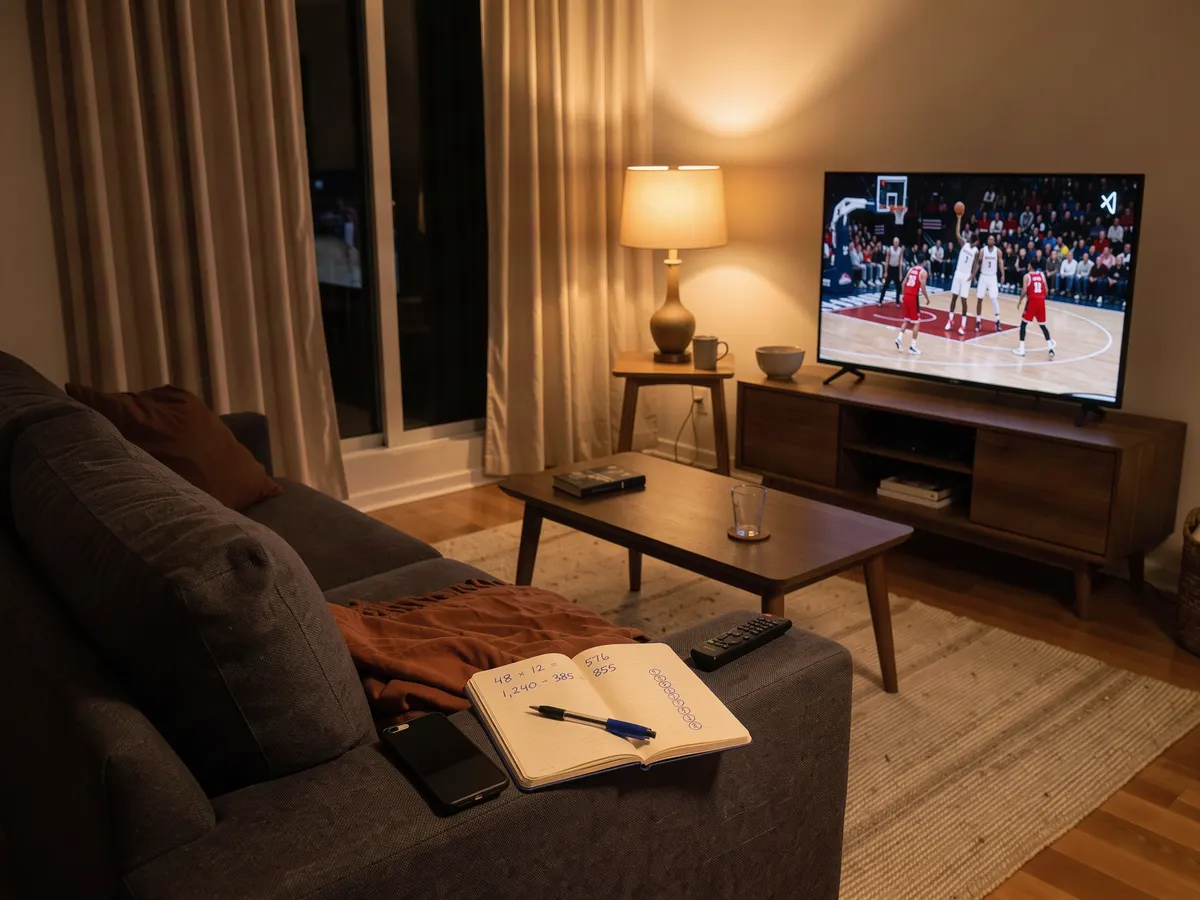
- Track every stake, not just the memorable ones. Record date, market, stake and result in a spreadsheet. Memory is selective: it keeps the ball-by-ball parlay that landed and quietly discards eleven that did not. A month of honest tracking tells you more about your betting than any tipster.
- Decide in advance what a losing day ends with. Write the rule down: when the daily loss limit is hit, the app closes. No doubling up on the late game to level the ledger. Chasing losses is the single behaviour that converts a manageable hobby into a serious problem, and it almost always starts as a reasonable-sounding attempt to get back to even.
- Build in breaks. Use cool-off tools between seasons or tournaments, and treat an uninterrupted betting calendar, where one league’s season flows into the next with no gap, as a risk factor in itself.
Warning signs it is time to step back
The recognisable markers of problem gambling are behavioural, not financial, and they show up long before the balance does. Watch for betting more than planned to recover losses, borrowing money or selling things to fund stakes, hiding the size or frequency of bets from family, restlessness or irritability when trying to cut back, betting to escape stress or low mood, and staking money set aside for essentials. One of these is a prompt to check in with yourself. Several together is a prompt to use a limit, a cool-off or a self-exclusion tool now rather than after the next slate of fixtures.
The same rules in cricket, football and kabaddi markets
None of this is basketball-specific. The structural risks the NBA and WNBA campaign points at, high-frequency in-play prices and large volumes of prop bets, exist in heavier form in cricket, where a single T20 match can offer markets on the next ball, the next over, the top batter and the method of dismissal, each priced with its own margin and each resolving in seconds. Football’s in-play markets work the same way, as do kabaddi and tennis props.
The faster a market settles, the less time there is between the loss and the next decision, and that gap is where self-control actually lives. A bettor who would never stake a month’s budget on a Test result can do exactly that in forty minutes of ball-by-ball betting without noticing. One practical addition for bettors in India: betting law differs by state and platform, so confirm what is permitted where you live, and check that any operator you use offers genuine limit and self-exclusion controls rather than just a page about them.
Where to look for help
Three categories of support exist almost everywhere betting is offered: self-exclusion programmes that block your access to accounts for a fixed period, operator-side tools such as deposit, loss and session limits, and helplines or counselling services run by independent organisations. The NBA and WNBA campaign directs viewers to national resources including helpline contacts and self-assessment tools, with the NCPG as its partner on harm prevention.
Helpline numbers and support services vary by country and change over time, so look up the current contact for your own jurisdiction rather than trusting a number quoted in an article. A short self-assessment questionnaire from a recognised problem gambling body is a reasonable starting point if you are unsure whether your betting has drifted, and speaking to someone outside the activity, a friend, a family member, a counsellor, tends to be more useful than another night of self-monitoring.
What the campaign cannot do for you
A PSA runs for a season. The habits it describes either get built into your account settings and your notebook, or they stay as something you agreed with once during a timeout. The leagues will keep their sportsbook partnerships, prediction markets will keep expanding, and the margin in every price will stay exactly where it is. What is actually unresolved is narrower and more personal: whether the limit you would set today is the one you will still accept on a night your team is three points down with the money already in play. Set it now, while nothing is riding on it.
About The Author