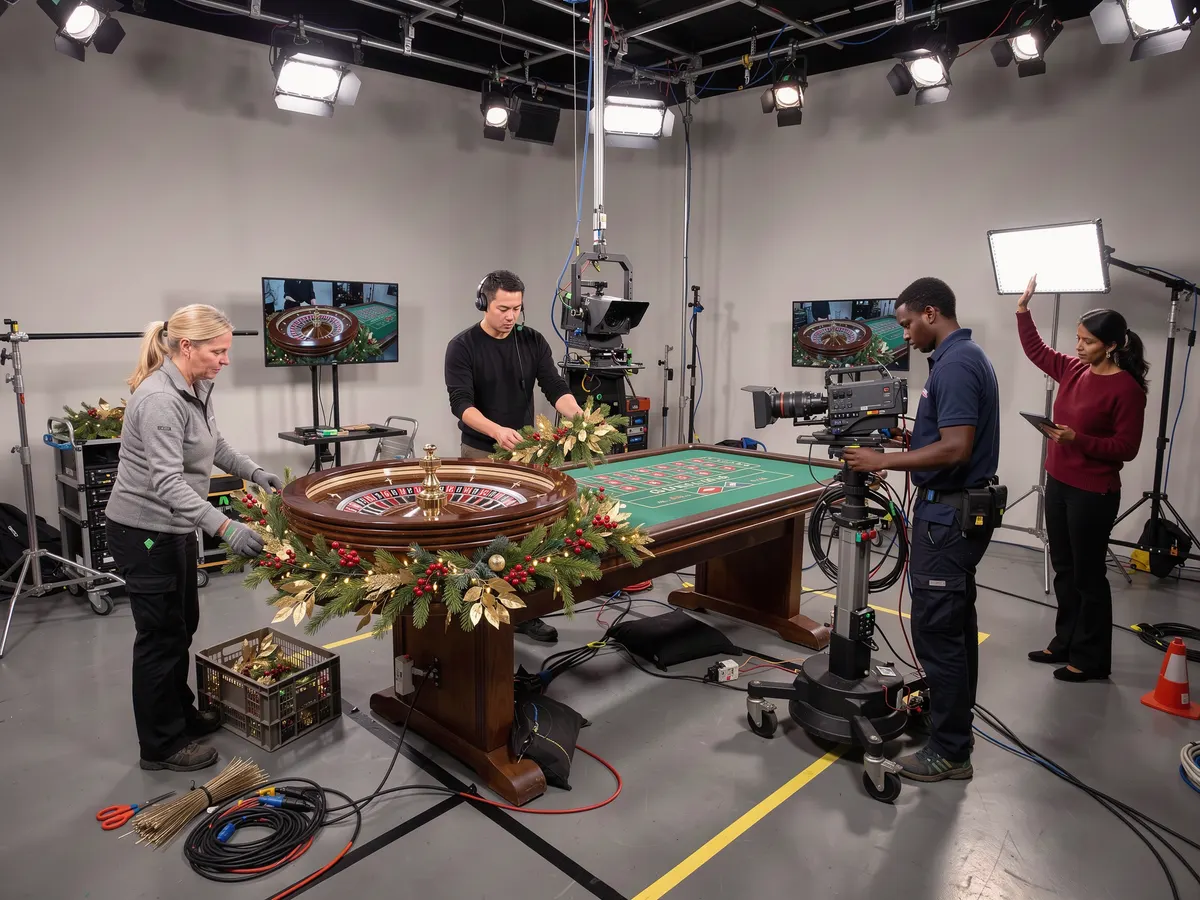
Dress a single-zero roulette table in pumpkins and cobwebs and its house edge is still 2.7%. That number is the thesis of this article. A casino seasonal game rotation is a merchandising and logistics exercise, not a change to the product you are actually betting on, and the gap between those two things is where most players get confused, and where a few get caught out by the promo terms that ride along with the decorations.
Live casino studio ICONIC21’s production director, Stanislav Kriuk, recently walked trade press through what a Halloween set change involves on the studio floor. It is a useful window, because the same discipline applies in the online lobby, where nobody sees the work at all.
What a seasonal rotation actually changes
A casino seasonal game rotation changes which games are visible, which ones are promoted, and what the tables and lobby look like. It does not change RTP, house edge, paytables or RNG behaviour on any game that was already live. Those are properties of the game itself, certified before launch, not of the wrapper around it.
Three distinct things get called “seasonal” and they are worth separating:
- Decorative set changes in live dealer studios, where the table, backdrop and lighting are redressed while the game rules stay identical.
- Lobby re-merchandising, where an operator reorders categories, builds a themed shelf and pushes certain titles to the top of the grid.
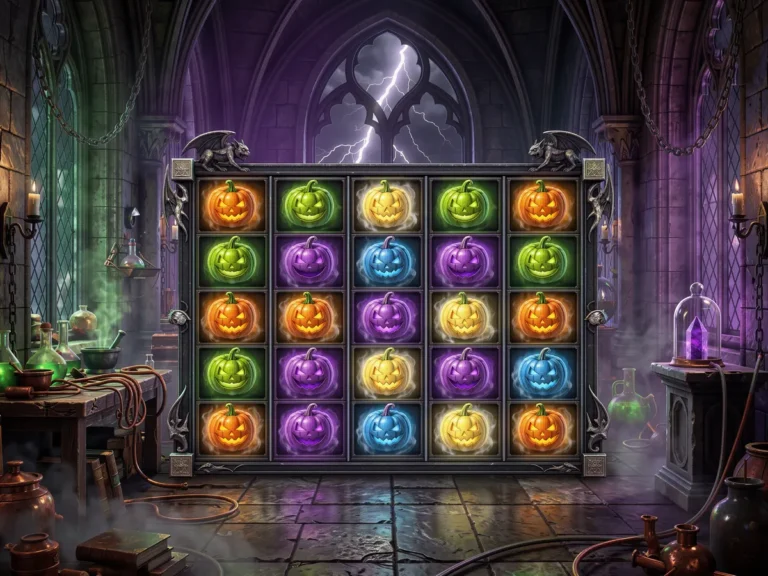
- Genuinely new seasonal releases from providers, which are separate games with their own RTP, volatility and features.
Only the third category changes the math, and it changes it because it is a different game, not because it is festive. If a Christmas edition of a slot you like appears in the lobby, check the info screen. Same studio and similar art does not mean same RTP or same volatility.
Weeks of planning for a set that runs ten days
Seasonal set changes in live studios are planned weeks ahead and installed table by table during maintenance windows, specifically so the game feed never goes dark for players. Kriuk’s account of the Halloween process covers the parts that are invisible on stream: camera testing to see whether the decorations, lighting and colours actually read on a remote player’s screen, alignment of the design with the operator’s brand rather than generic holiday clutter, and camera, lighting and sound checks after each table is finished.
The constraints that do not flex are the physical ones. Fire safety, emergency access, ventilation and the technical equipment around the table all stay fully operational through the change. A decoration that blocks an exit or a vent does not go up, however good it looks on camera.
This is why the trade conversation treats seasonal sets as an operational-excellence signal. Anyone can buy decorations. Hanging them across dozens of tables without a single round being disrupted, without a colour clash that makes card suits harder to read on a compressed stream, and without touching a safety requirement, is a scheduling and QA problem. A studio that gets it wrong shows you immediately: washed-out footage, odd shadows across the layout, a table that looks nothing like the brand it is supposed to represent.
The online lobby moves faster, and leaves more traces
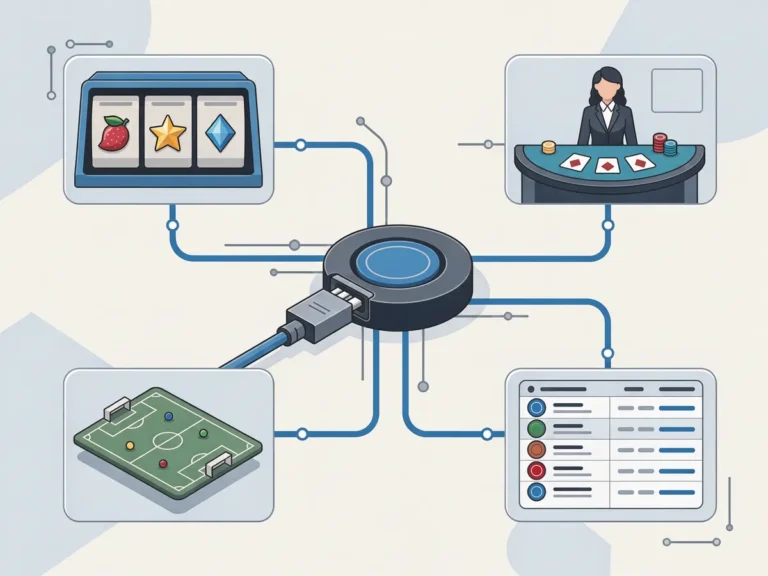
Online game library management runs on the same logic with none of the physical limits. An operator with thousands of titles cannot show them all, so the lobby is curated: categories are reordered, a themed collection is assembled, and a handful of games are placed where the thumb lands first. Swapping a shelf takes minutes, not maintenance windows.
What this means in practice is that “new” in a seasonal collection often means “newly promoted”. A game that sat on page eleven in August can headline the October shelf without a single line of code changing. That is not deceptive, it is merchandising, and it is the same reason a supermarket moves chocolate to the front in the last week of October. But it does mean the position of a game in the lobby carries no information about its quality or its payout structure.
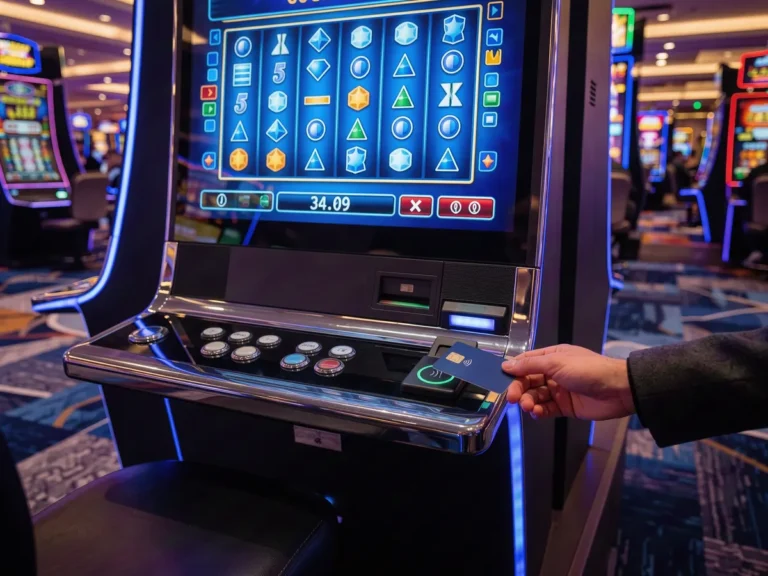
Behind the shelf, the harder part of game library management is contractual and regulatory: which provider titles are licensed for which market, which games have local certification, which have to be geo-blocked. A game vanishing from your lobby after a rotation is more often a licensing or compliance matter than an editorial one, which is why the same operator’s library can look quite different from one jurisdiction to the next. Operators run reporting on every title’s turnover and margin the way land-based venues do, and the casino management systems that track slot floor payouts are the closest land-based analogue to that back-end view.
Seasonal slot promotions and the clause under the headline
Seasonal promotions are where a rotation stops being cosmetic and starts affecting your money. The headline number on a festive offer is almost always qualified by terms further down, and the qualifying term usually matters more than the headline.
Here is the pattern to look for, in the order it tends to bite:
| What the promo advertises | The term that qualifies it | Why it matters |
|---|---|---|
| A matched deposit bonus | Wagering requirement (playthrough) | A $100 bonus at 30x means $3,000 staked before any withdrawal |
| “Play any game” | Game weighting | Slots often count 100%; table and live games frequently count far less, so requirements clear slower |
| Free spins on a seasonal slot | Spin value and winnings cap | The spins are tied to one title at a set stake, and winnings may be capped or paid as bonus funds |
| A large headline figure | Max cashout | Caps what you can actually withdraw from bonus play regardless of the balance shown |
| A limited-time festive offer | Expiry window and max bet | Unused bonus funds lapse, and exceeding the per-spin cap can void the bonus entirely |
None of these terms are unusual or sinister. They are how bonuses have always worked. The problem is that seasonal framing adds time pressure to a decision that benefits from none, and a bonus with a short expiry pushes you toward playing faster and longer than you planned in order to clear it. My own rule is simple: if the wagering requirement multiplied by the bonus is more than I would have wagered anyway that month, the offer is worth less to me than the free play it looks like.
The calendar exists because engagement is cyclical
Operators build seasonal calendars because player activity is seasonal, and a rotation gives the retention team something concrete to message about. A themed tournament, a festive leaderboard, a redressed live table and a new release landing in the same fortnight all serve one purpose: giving a lapsed or occasional player a reason to open the app this week rather than next month.
Seasonal pushes also segment. The same rotation reaches different players as different offers, because engagement tooling tiers accounts by value and activity. If you want the mechanics of that, the way iGaming VIP loyalty programs tier and reward players explains most of why your festive offer looks nothing like someone else’s.
The useful inversion for a player: a rotation is a signal that the operator wants more of your attention in a specific two-week window. That is worth knowing before you decide whether to give it. Deposit limits, session limits and reality checks exist precisely for the weeks when the calendar is loudest, and setting them before a promo period starts is easier than setting them during one. If a seasonal push is making you play more than you intended, cool-off and self-exclusion tools are in the same account settings menu.
What a rotation can’t tell you
A well-executed seasonal rotation proves an operator can coordinate studios, providers, compliance and marketing on a deadline. That is genuinely hard, and it correlates with the kind of back-office competence you want from a company holding your balance. It is not nothing.
What it does not prove is anything about payout speed, KYC turnaround, complaint handling, or whether the terms attached to this month’s offer are fair. Those live in different departments. And the numbers that would settle the question of whether seasonal rotations actually work, retention uplift, revenue per active player during themed weeks, repeat play on seasonal titles after the theme ends, are not published by operators or studios. The trade discussion runs on production detail and process, not on disclosed performance data.
So read a rotation for what it is. The set change is craft. The lobby shelf is merchandising. The promo terms are the only part with your money in them, and they are the part that is written down, in full, before you accept it.
About The Author