Should a new distribution deal change how you feel about a slot studio you have never heard of? That is the practical question behind the October 2026 announcement, reported by G3 Newswire, that Peter & Sons has partnered with Casino Plus in the Philippines. The honest answer is yes, but only in a narrow way, and most players read the wrong thing into it. A deal tells you a studio cleared somebody’s compliance desk. It tells you nothing about whether Peter & Sons slot games will suit the way you actually play.
Who is Peter & Sons?
Peter & Sons is an independent B2B slot studio: it designs and builds slot games, then licenses them to online casinos rather than running a casino of its own. You will never hold an account with Peter & Sons or deposit money with the studio. Its games appear inside operator lobbies, usually filed under the provider menu alongside bigger names.
The studio sits in the category of smaller, design-led suppliers rather than high-volume content factories. Its public identity is built on a strongly illustrated, hand-drawn visual style and a comparatively curated release slate, which is a different commercial bet from studios that ship a title every week and compete on sheer catalogue size. For founding dates, headquarters and the current portfolio count, the studio’s own site and the public registers of the regulators that have certified its games are the places to confirm details rather than aggregator pages, which often repeat each other.
That distinction matters when you are judging what a partnership means. A studio with twenty games treats each new market as a significant share of its total distribution. A studio with three hundred treats it as a line item.
What the Casino Plus partnership actually covers
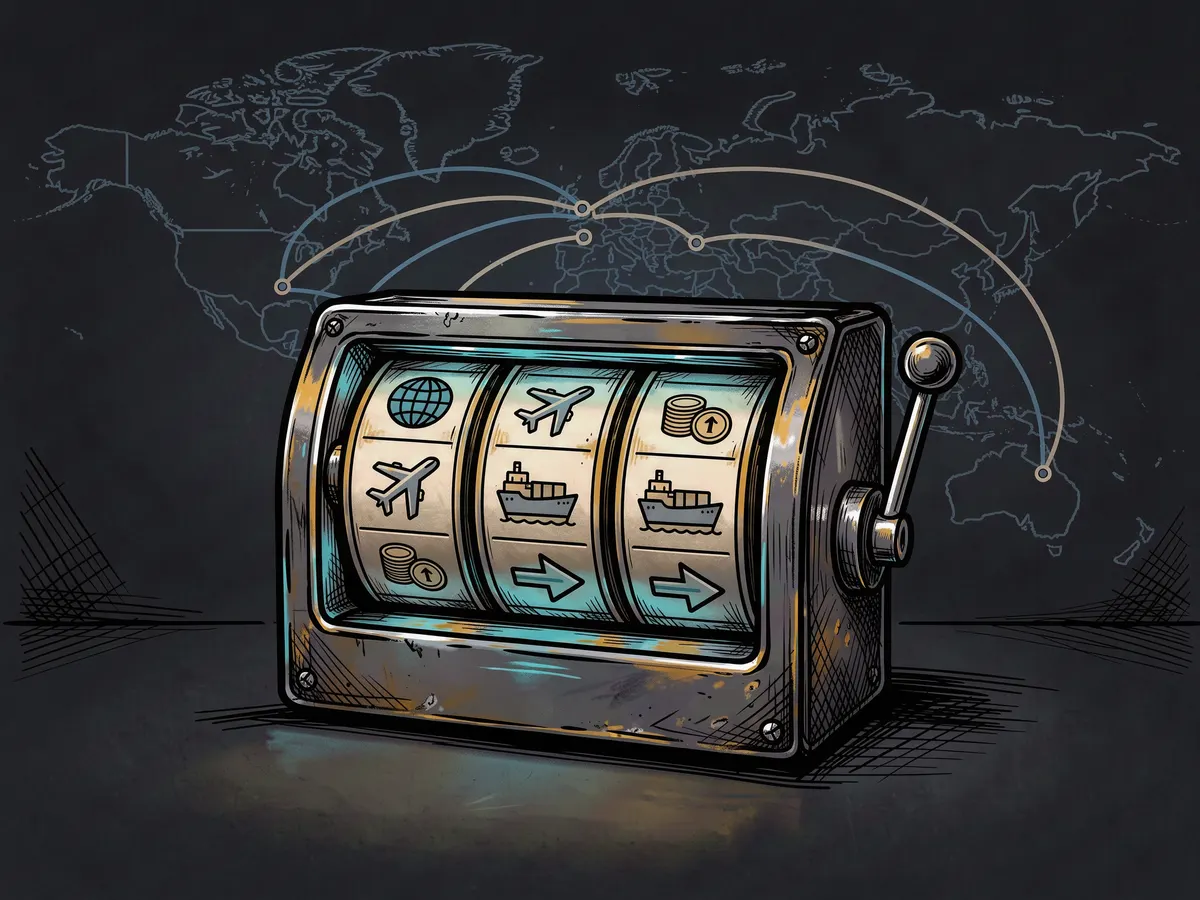
According to G3 Newswire’s report, selected Peter & Sons titles are now available to players on Casino Plus, described as one of the Philippines’ leading online gaming platforms. The stated aim is reaching a wider Southeast Asian audience. G3 Newswire framed the Philippines as a fast-moving, heavily mobile market where players respond to games with a clear visual identity and recognisable pacing, and noted that Casino Plus has built its product around how local players use gaming platforms day to day.
What the report does not contain is the commercial detail: no revenue share, no exclusivity window, no number of titles, no launch schedule beyond the games being live. Treat any article that supplies those numbers with suspicion unless it names a source. Operationally, this is a content integration. The studio’s game server connects to the operator’s platform, the titles appear in the lobby, and the operator handles the account, the wallet and the payouts.
It is also not an isolated move. The same outlet has previously reported Peter & Sons expanding its Canadian presence through a TonyBet launch in Ontario and Alberta. Two separate licensed markets inside roughly the same period is a pattern, not a one-off, and the pattern is the interesting part.
Distribution reach or quality signal? Reading a slot developer expansion correctly
There are two defensible readings of news like this, and the gap between them is where most coverage goes wrong.
The generous reading: entering regulated or licensed markets is a genuine credibility marker. Operators in supervised jurisdictions cannot plug in whatever content they like. Games generally need certification by an accredited testing laboratory, the studio needs the appropriate supplier approval, and the mathematics has to be documented and auditable. A studio appearing on platforms in Ontario, Alberta and the Philippines has, at minimum, satisfied several different compliance departments that its RNG behaves and its paytables match its claims. That is not nothing. It is exactly the hurdle that grey-market content never has to clear.
The sceptical reading: compliance approval is a floor, not a verdict. It confirms the games are fair in the technical sense that outcomes are random and the published return is accurate. It says nothing about whether the games are fun, whether the volatility suits your bankroll, or whether the studio will still be supporting those titles in two years. Plenty of certified, perfectly legitimate slots are also forgettable.
Both are true, and I would weight the first one higher than most players do, for a specific reason. The most common way a player gets hurt by a game is not rigged maths. It is playing an uncertified title on an unlicensed site where the payout is discretionary. Studios that build a distribution footprint across licensed markets are self-selecting out of that problem. So treat an expansion story as evidence about the company, not the game. If you want the broader argument, the same logic applies to any supplier moving into supervised territory, as covered in this look at what regulated market expansion proves about a slot studio.
What Peter & Sons slots play like
The studio’s recognisable trait is art direction. Where much of the market leans on polished 3D renders and cinematic bonus intros, Peter & Sons builds around illustration with visible linework and character design, paired with soundtracks that carry the theme rather than sitting under it. In a lobby of several thousand thumbnails, that is a deliberate commercial strategy: be identifiable at thumbnail size.
Volatility and RTP: check the paytable, not the press release
Here is the condition almost nobody checks. Many modern slots ship to operators in more than one return-to-player configuration, and the operator chooses which version to run. A game advertised at one RTP on a review site can be running a lower setting at the casino you are actually sitting in. The number that governs your session is the one in that game’s own info screen, inside that specific lobby, not the one in a news article.
So rather than quote a range for the studio that I cannot verify title by title, the useful advice is mechanical: open the paytable before your first spin, read the stated RTP and the maximum win, and check whether the game describes itself as high or low variance. High volatility means rarer but larger wins; low volatility means more frequent, smaller ones. Volatility does not change RTP, and neither one promises anything about a single session. If those terms are fuzzy, this breakdown of a recent slot’s confirmed RTP and volatility shows what a properly documented game looks like.
Features and mechanics
Expect the modern feature vocabulary: scatter-triggered free spins, wilds that substitute or multiply, and bonus rounds with some collection or upgrade layer. Design-led studios of this size typically differentiate through the framing and pacing of a feature rather than by inventing an entirely new engine. Which specific mechanics appear in the Casino Plus selection depends on which titles the operator took, and that list is the operator’s to publish.
Where to find Casino Plus games and Peter & Sons titles
Through licensed operators, filtered by provider. In the Philippines, that now includes Casino Plus, which operates in the country’s domestically regulated online market overseen by PAGCOR. Elsewhere, availability depends on which operators in your jurisdiction have taken the studio’s content, which is why the Canadian launch through TonyBet in Ontario and Alberta was reported separately.
The practical route is to use the provider filter in a licensed casino’s lobby rather than searching for the studio’s games directly. Sites that surface a studio’s full catalogue outside any licensing framework are usually not offering you the certified build, and your deposit has no regulator standing behind it.
The checks worth running on any newer studio
Four things, in order of how much they protect you.
| What to check | Where to find it | What it tells you |
|---|---|---|
| Operator licence | Footer of the casino site, then the regulator’s own register | Whether anyone can enforce a payout for you |
| Independent testing | Studio or operator certification listings | That the RNG and paytable were audited |
| Published RTP | The game’s info screen in that lobby | The actual long-run return of the version you are playing |
| Volatility and max win | Game info screen or provider page | Whether the swing profile fits your bankroll |
Note the order. The licence of the operator matters more than the reputation of the studio, because the operator holds your money. A certified Peter & Sons title on an unlicensed site is still a bad bet, and not because of the maths.
One last point that the enthusiasm around new providers tends to bury: every slot, from every studio, carries a house edge. A 96% RTP game returns roughly 96 units per 100 wagered averaged across millions of spins, which means the remaining 4 is the cost of playing, and no art style or bonus mechanic changes that. Set a deposit limit before you explore a new catalogue, treat the spend as entertainment, and use the operator’s limit and cool-off tools if a session stops feeling like one.
Whether Peter & Sons becomes a name you recognise in two years depends on something this announcement cannot answer: whether players in Manila and Toronto keep opening the games after the launch week. Distribution gets a studio in front of people. It does not keep it there.
About The Author