The first visible piece of a workforce that does not exist yet
How do you staff a casino floor in a country that has never legally had one? MGM Osaka has endorsed a casino dealer training course ahead of the opening of Japan’s first japan integrated resort casino, according to industry trade reporting, and that endorsement is the earliest concrete sign of how the resort intends to fill the croupier, pit and surveillance roles it will need on day one.
What the report confirms is narrow: the operator has put its name behind a course. The provider, the curriculum hours, the intake size and any formal link to hiring are not established by the headline alone, and anyone writing or reading about this should check the operator’s own announcement before treating specifics as fact. That gap matters, because an endorsement is the cheapest signal in the industry and the easiest one to over-read.
Japan’s first integrated resort, and the law that permits it
MGM Osaka is the integrated resort planned for Yumeshima, an artificial island in Osaka Bay, developed by a joint venture led by MGM Resorts International and Japanese financial group ORIX. It will be the first legal casino on Japanese soil. Public plans describe a resort built around hotels, conference and exhibition space and entertainment venues, with the casino itself legally capped at 3% of total floor area.
Publicly reported target opening has been around 2030, and that date has already moved more than once. Treat any opening date as provisional until the operator restates it.
From a blanket ban to three licences
Japan’s Criminal Code has long prohibited gambling, with carve-outs for pari-mutuel racing, cycling, boat racing and the public lottery. The IR Promotion Act of 2016 established the principle that integrated resorts could exist; the IR Implementation Act of 2018 built the machinery, capping the country at three IR licences and creating the Casino Management Committee, rendered in English as Japan’s Casino Regulatory Commission, as the gaming regulator. Osaka’s area development plan received national certification in 2023. Nagasaki’s rival bid did not survive the process, which is why Osaka is currently alone.
What a dealer course can teach, and what it cannot grant
A private training course can teach the craft; it cannot licence anyone. Under the Implementation Act, people working in defined casino roles require approval from the regulator, and no school, however well endorsed, substitutes for that. This is the point where the usual “complete the course, get the job” framing stops working in Japan.
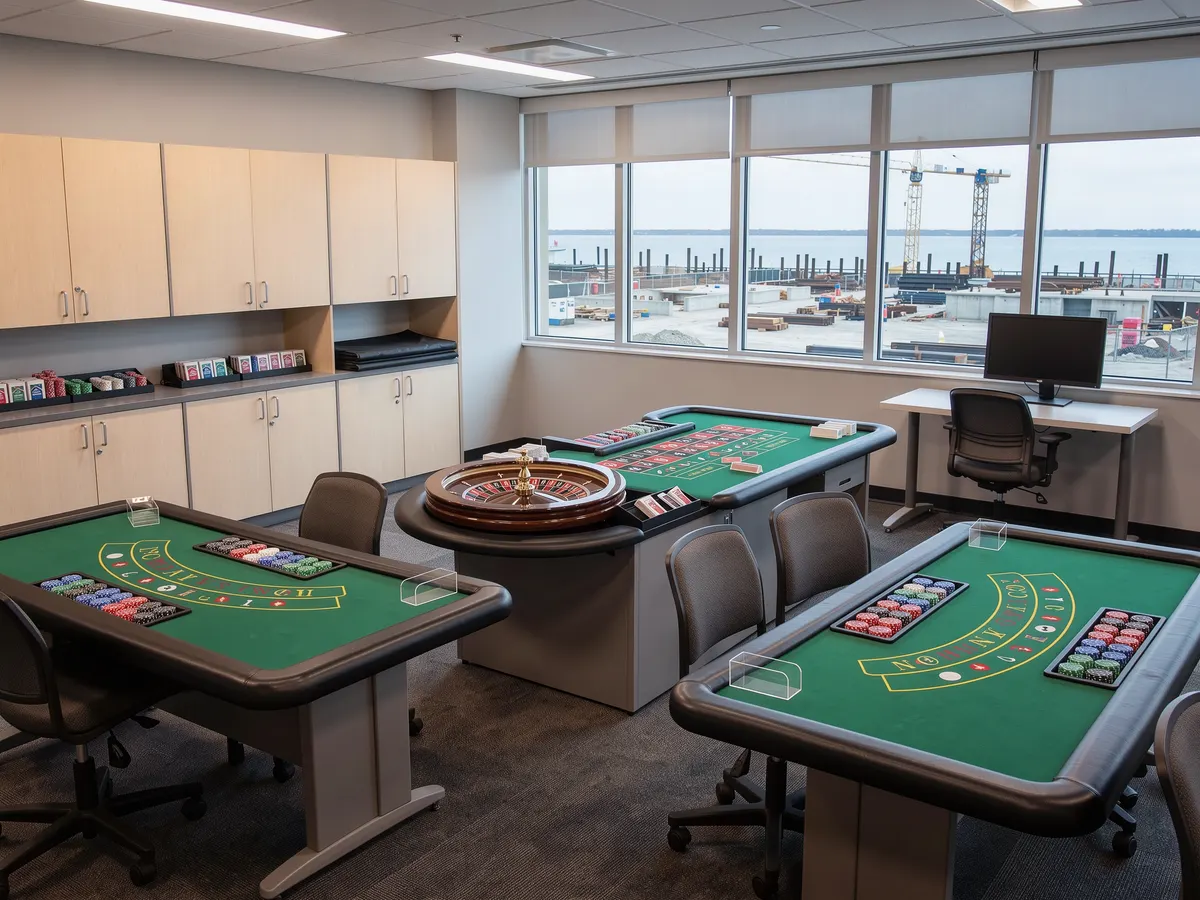
What a credible dealer course covers is well established across the industry: the rules and procedures of baccarat, blackjack and roulette, chip handling and cutting, accurate payout calculation under time pressure, table etiquette and customer service, plus the compliance layer, which in a Japanese IR means anti-money-laundering awareness, age and identity checks, and responsible-gambling duties such as recognising distress at the table. Japanese language capability for a customer-facing role is a reasonable expectation rather than a confirmed requirement.
So what does an operator endorsement buy? Credibility for the school, a filtering mechanism for the operator, and a signal to candidates about which curriculum is worth their money. It is not a guarantee of an interview, and reading it as one is how people lose tuition fees.
Three ways to staff a casino from zero, and what each costs
Japan has no pre-existing legal casino labour pool. Macau can poach from fifty years of continuous operation; Las Vegas has dealer schools older than most of its casinos. Japan has pachinko parlours, racetracks and a very strong hospitality sector, none of which produce licensed dealers. That leaves three routes, and the realistic answer is that MGM Osaka will use all three in different proportions.
| Route | What it solves | Where it falls short |
|---|---|---|
| Third-party dealer schools in Japan | Builds a domestic candidate pool early, at the candidate’s expense rather than the operator’s | Graduates arrive untested on a live floor; quality varies between providers, which is exactly why endorsement is being sought |
| Recruiting experienced staff from Macau, Singapore or Manila | Delivers proven dealers and, more importantly, supervisors who have run a pit before | Visa classification, language, cost, and political sensitivity about local employment commitments in Osaka |
| In-house academy run by the operator | Trains to house procedure and compliance standards directly, which is how large groups normally do it | Needs the building, the equipment and a date; it scales late in the project, not five years out |
The verdict is unglamorous. Domestic schools handle volume at the dealer level, international recruitment fills the supervisory layer that cannot be created from a classroom, and the in-house academy standardises everyone shortly before opening. The role nobody can shortcut is the pit boss. A dealer can be competent in months; someone who can read a table, manage a dispute and spot a procedural breach in real time usually cannot.
Where Japan sits against Macau, Singapore and Manila
Workforce readiness is the part of the competitive picture that gets the least attention and causes the most damage when it goes wrong. Macau remains Asia’s revenue centre and has the deepest talent bench, with a local-employment policy that keeps dealer roles with residents. Singapore’s two integrated resorts, Marina Bay Sands and Resorts World Sentosa, set the benchmark for what a high-service, heavily regulated IR looks like, and both built their floor staff largely from scratch in the late 2000s. The Philippines has Entertainment City and a large English-speaking gaming workforce, and has been actively courting the same regional players.
Japan’s competitive assets are obvious: Osaka’s location, inbound tourism demand and a domestic hospitality standard that other markets study. Its handicap is the one this training course addresses. A resort can be built in five years; a floor culture takes longer, and the gap between a technically correct dealer and a good one is what regional high-value customers actually notice.
Who can realistically apply, and what to expect
The hiring will stretch well beyond the gaming floor, and most of it will not involve cards at all. Expect recruitment across:
- Dealers and croupiers for table games, the largest single gaming-floor cohort
- Pit supervisors and shift managers, likely to include experienced hires from other Asian markets
- Surveillance and security staff, a regulated function with its own approval requirements
- Cage, count room and compliance roles tied to anti-money-laundering obligations
- Hotel, food and beverage, MICE and entertainment staff, which will dwarf casino headcount given the 3% floor cap
Prerequisites for gaming roles will centre on regulator approval, background checks and age eligibility. Nobody should publish salary figures for these jobs yet; no reliable public pay scale for Japanese casino dealers exists, for the straightforward reason that the job does not exist in Japan so far. Treat any number you see circulating as unsourced until an operator or the regulator confirms it.
Whether foreign dealers will be recruited in volume is genuinely unsettled. It depends on visa classification and on political commitments around local hiring in Osaka, and neither has been resolved publicly. MGM’s record in other jurisdictions shows the group negotiates these terms with host governments rather than setting them, something visible in how its US properties have handled local obligations, including the dispute over its blocked Springfield casino sale.
Milestones worth tracking
Three things will tell you more than any further endorsement. First, whether additional training partnerships are announced, and whether any of them come with stated intake numbers or hiring commitments. Second, the regulator’s progress on casino business licensing and employee approval procedures, which determines when anyone can legally be hired into a gaming role. Third, a restated and firm opening date.
The safeguards are already written into the framework and will shape the job itself. Residents of Japan face an entry fee of ¥6,000 per 24-hour period and visit caps of three times per seven days and ten times per 28 days, enforced through My Number identity verification. Dealers will work inside that system, not alongside it, which makes responsible-gambling training part of the core curriculum rather than an add-on. Whether any Japanese dealer school is currently teaching that part properly is the question worth asking before paying for a course. If you are weighing one up, ask the provider what it says about the regulator’s approval process, and be sceptical of any answer that implies it can hand you a licence.
Gambling carries a built-in house edge and should be treated as entertainment with a cost, not a source of income. If it stops feeling like entertainment, use deposit limits, cool-off periods or self-exclusion.
About The Author