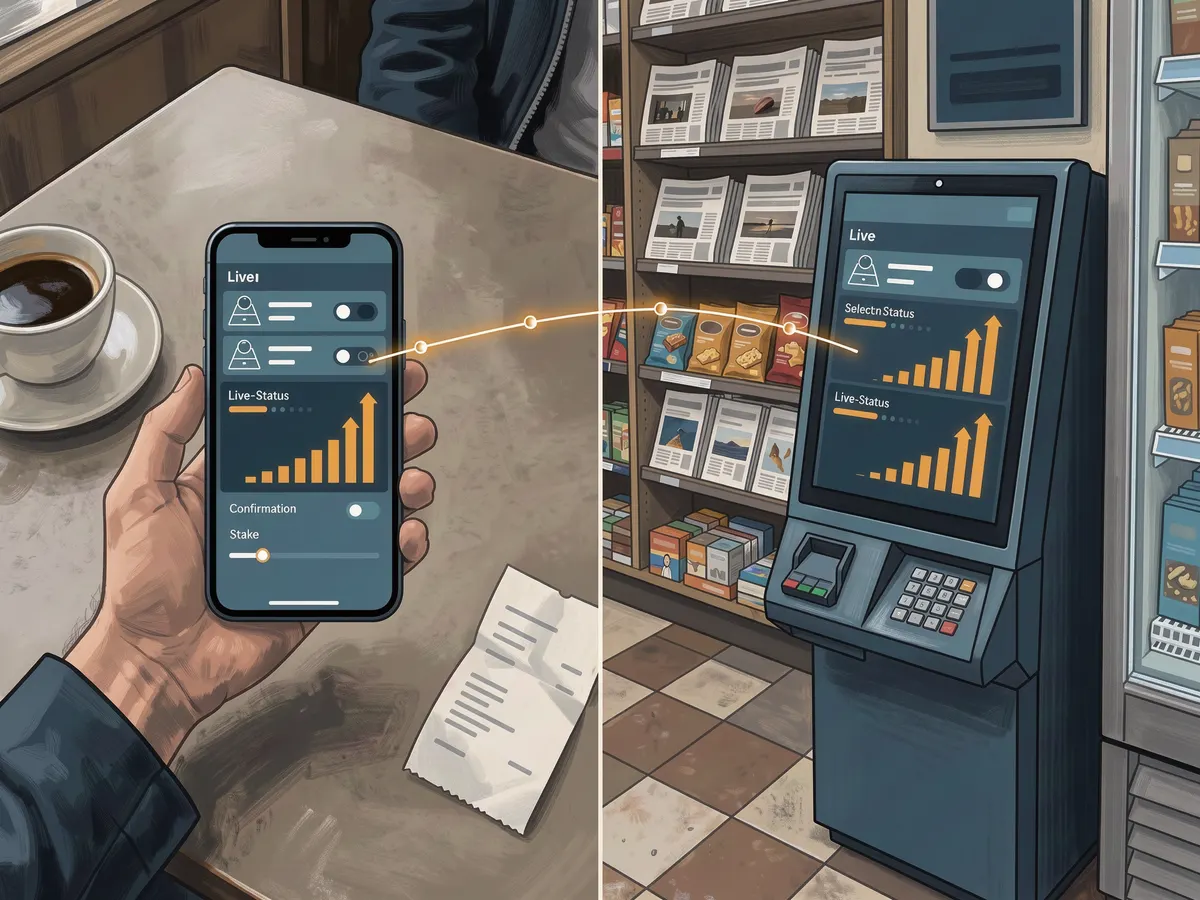
2,350. That is the number of retail points of sale that came along for the ride when OpenBet switched Loterie Romande’s sportsbook onto its platform. It is also the most informative number in the whole announcement, and it has nothing to do with speed.
Here is the argument of this piece: “next generation sportsbook technology” is a phrase about plumbing. It describes how quickly and reliably a bet gets from your thumb to a priced, confirmed ticket, and whether that ticket looks the same whether you placed it in an app or at a counter in Lausanne. It says nothing about the price you got. Most coverage of platform launches blurs those two things together, and bettors end up expecting a better deal when what they are actually being offered is a better queue.
What OpenBet actually switched on with Loterie Romande
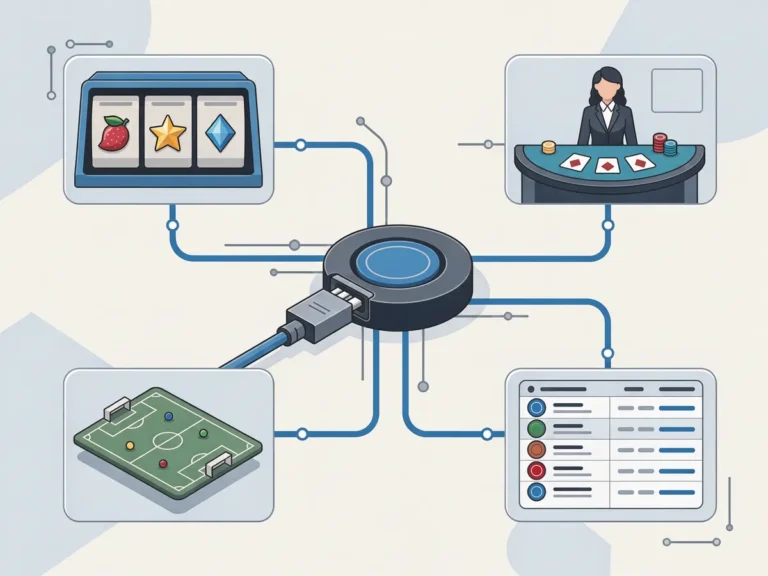
OpenBet has migrated Loterie Romande’s JouezSport omnichannel sportsbook onto its own platform, covering online play, self-service betting terminals and 2,350 retail points of sale. The announcement was published in October 2026. Loterie Romande is the exclusive regulated sports betting operator for Switzerland’s six French-speaking cantons and a member of the World Lottery Association; OpenBet states its technology powers more than 20 lotteries worldwide.
That is the confirmed set of facts. Worth noting what is not in it: no published latency figures, no before-and-after on bet acceptance times, no measured uptime target. Platform launches almost never come with those numbers, which is precisely why the marketing language fills the gap. Everything below about what “next-generation” platforms typically improve is general industry description, not a claim about this specific deployment.
Decoding the buzzphrase: three things that actually change
Strip the marketing off a sportsbook platform migration and you are usually left with three measurable improvements. None of them are glamorous. All of them are noticeable if you bet regularly.
Faster bet placement and slip processing
Bet slip processing speed is the gap between tapping “place bet” and holding a confirmed ticket at a locked price. On older systems that gap can stretch long enough for the market to move, which produces the prompt every bettor knows: the odds have changed, accept or decline. Faster slip processing does not get you a better price. It gets you fewer of those prompts, and fewer outright rejections when a market suspends mid-submission.
In retail the same improvement shows up as throughput. A terminal that prints a ticket in two seconds instead of six changes what happens to the queue in a kiosk fifteen minutes before kick-off. Nobody writes press releases about queue length, but it is the thing a counter operator notices first.
Live betting that keeps up with the match
In-play betting is where latency stops being cosmetic. During a live market the real-time odds feed has to reprice on every meaningful event, suspend around goals, cards and reviews, then reopen. Responsiveness means two things at once: how fast markets come back after a suspension, and how closely the price on your screen matches the price the system will actually accept.
Cash-out is the clearest test. A cash-out figure is a live calculation against current prices, so a slow or stale feed produces offers that vanish the moment you press the button. If you have ever watched a cash-out value flicker and then fail, you have met the limit of an ageing live betting technology stack. For a refresher on how in-play pricing and cash-out are calculated in the first place, read our explainer on sportsbook odds before judging any platform on feel alone.
The uncomfortable half of this: a faster feed helps the trading side as much as the betting side. Quicker suspensions and quicker repricing mean fewer stale prices left hanging, and stale prices are the ones bettors want. Better live betting technology makes the experience sharper and the pricing tighter. Those are not the same gift.
Digital and retail that actually match
Digital-retail synchronisation means one account, one wallet and one bet history across every channel an operator runs. In practice that looks like scanning a paper ticket into the app to track it, topping up at a counter and seeing the balance online, or settling a retail bet without going back to the shop. Which of those a given operator enables is a commercial choice, not an automatic consequence of the platform.
The three channels do different jobs, and syncing them is what turns them into one product rather than three.
| Channel | What it does best | What syncing adds |
|---|---|---|
| Online and app | Full market depth, in-play, cash-out | Visibility of bets placed elsewhere |
| Self-service terminal | Quick pre-match bets without staff | Shared balance and bet history with the app |
| Retail counter | Cash in and out, staff help | Digital tracking and settlement of paper tickets |
Why a Swiss lottery operator is a useful case study
Omni channel betting is easy to talk about and expensive to build, and lottery operators are the ones who have no choice. Loterie Romande holds exclusive regulated sports betting rights across six cantons, which means its customers include people who have placed cash bets over a counter for decades and have no intention of stopping. A digital-first operator can treat retail as a marketing stunt. A licensed lottery with 2,350 points of sale cannot.
That is the confirmed part: the scale of the retail estate and the fact that the migration covers online, self-service and point of sale together. The broader pattern is general industry observation rather than anything stated in the announcement. Regulated monopoly and licensed-lottery operators across Europe have been consolidating onto single platforms that serve every channel, because running separate digital and retail systems means two sets of odds feeds, two reconciliation processes and two compliance surfaces. One platform is cheaper to audit. It is also the only way the balance in the app can match the balance at the till.
Does faster tech mean a better deal for bettors?
No. Platform upgrades change speed, reliability and convenience. They do not change the odds. Prices and margin are set by an operator’s trading and commercial policy, not by how fast its servers respond. A next-generation sportsbook is a smoother sportsbook, not a cheaper one.
The arithmetic is worth seeing once. Take a two-way market priced at 1.90 on each side. The implied probability of each outcome is 1 ÷ 1.90, or about 52.6%. Add both and you get roughly 105.3%, so the overround is about 5.3%. That figure is the operator’s built-in edge on the market, and it is identical whether the bet is accepted in 200 milliseconds or two seconds. No migration, no cloud architecture and no interface redesign moves it. Only the pricing does.
Which is the point where the standard take on these announcements stops working. “Next-generation technology” is reported as a benefit to players, and partly it is, but the benefit is experiential. If you want a better deal, compare prices across operators. If you want fewer failed cash-outs, platform quality is exactly what you should be looking at. Do not confuse the two, and do not let a fast interface persuade you that you are getting value.
How to tell whether an upgrade is real
Marketing claims about digital and retail betting platforms are unverifiable from the outside. What you experience as a customer is not. Over a few weeks of normal betting, these are the things that separate a genuine upgrade from a reskin:
- Bet confirmation speed, measured from submission to a priced ticket, not to a spinner
- How often you get an odds-change prompt on pre-match bets at quiet times
- Live-odds refresh rate and how quickly markets reopen after a goal or a card
- Cash-out reliability, specifically how often an accepted offer is honoured at the displayed figure
- Cross-channel consistency: same balance, same bet history, same account online, at a terminal and at the counter
- Uptime during peak events, which is the only test that matters, because every platform is fast on a Tuesday afternoon
The last two are the honest ones. Interface speed is cheap to fake with a loading animation; a shared wallet that reconciles cash and digital in real time is not.
Where omnichannel sportsbooks go next
The general direction reported across the industry is parity: one account, one wallet, one bet history, with retail treated as a channel rather than a legacy obligation. Self-service terminals increasingly act as entry points to the same system the app runs on, which is roughly what the OpenBet and Loterie Romande deployment describes. Beyond that, specifics are speculation, and operators have a long record of announcing capability well before customers can use it.
What stays open is measurement. No operator publishes bet acceptance latency, cash-out honour rates or peak-event uptime, so the only audit available is your own experience over a season. Keep an eye on it, and keep the other eye on the fact that none of this touches the margin.
Faster, steadier technology makes betting more convenient, which is worth something, and it also makes betting easier to do more of, which is worth watching. Set deposit and loss limits before the next big fixture rather than during it, and if following live markets is starting to feel less like a choice, operators are required to offer cool-off and self-exclusion tools. The research on sports betting and mental health is a useful companion read to any article about making wagering frictionless.
About The Author