Who actually sets the price next to the team you just backed?
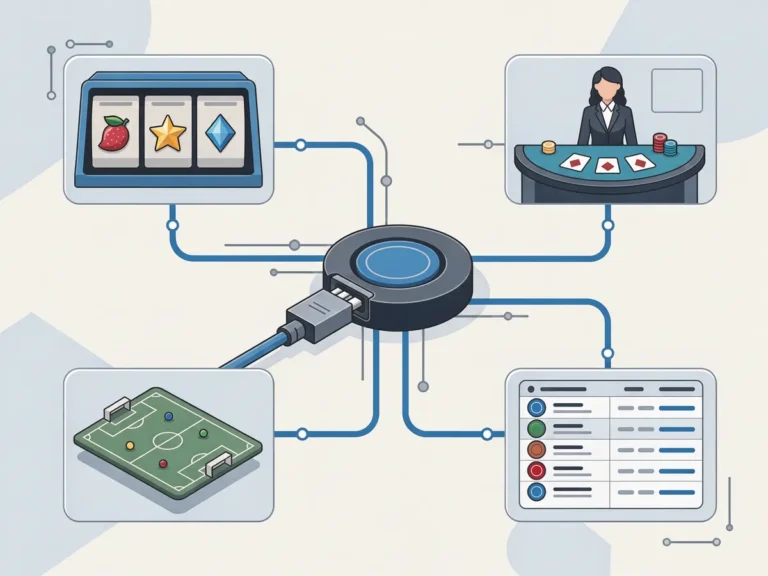
Almost certainly not the company whose logo is on the app. Sports betting content providers are B2B suppliers that compile odds, run trading operations and build betting products, then license all of it to consumer-facing sportsbook brands. The operator you register with handles the licence, the payments, the marketing and the app. A large share of what you bet on arrives through someone else’s feed.
This is not a fringe arrangement. It is how most sportsbooks outside the few giant in-house trading operations are built, and a mid-October 2026 announcement from virtual sports supplier Kiron, reported by G3 Newswire, is a tidy example of the model in motion. Understanding the layer underneath your bet slip changes how you read industry news, and it should change how much weight you give to a press release about “expanded content”.
The brand you see and the supplier you don’t
The split is cleaner than most people assume. The operator owns the customer relationship: the gambling licence in each jurisdiction, KYC, deposits and withdrawals, bonuses, customer support, and the front end you tap through. The sportsbook odds supplier owns the product: odds compilation, in-play trading, risk management, and the event catalogue.
SportyBet is an operator brand. Kiron is a content supplier. When you open a virtual football market on a SportyBet app in Nigeria or Ghana, the game engine, the simulation and the market structure can come from Kiron, while the account, the balance and the regulatory obligation sit with SportyBet. Two companies, one screen, and nothing on that screen is obliged to tell you which is which beyond a small provider credit in the game rules.
Worth separating out a third party that often gets lumped in: the platform provider. Some suppliers sell the whole sportsbook as software, others sell only data. Many operators mix three or four vendors.
From feed to bet slip: how the supply chain actually runs
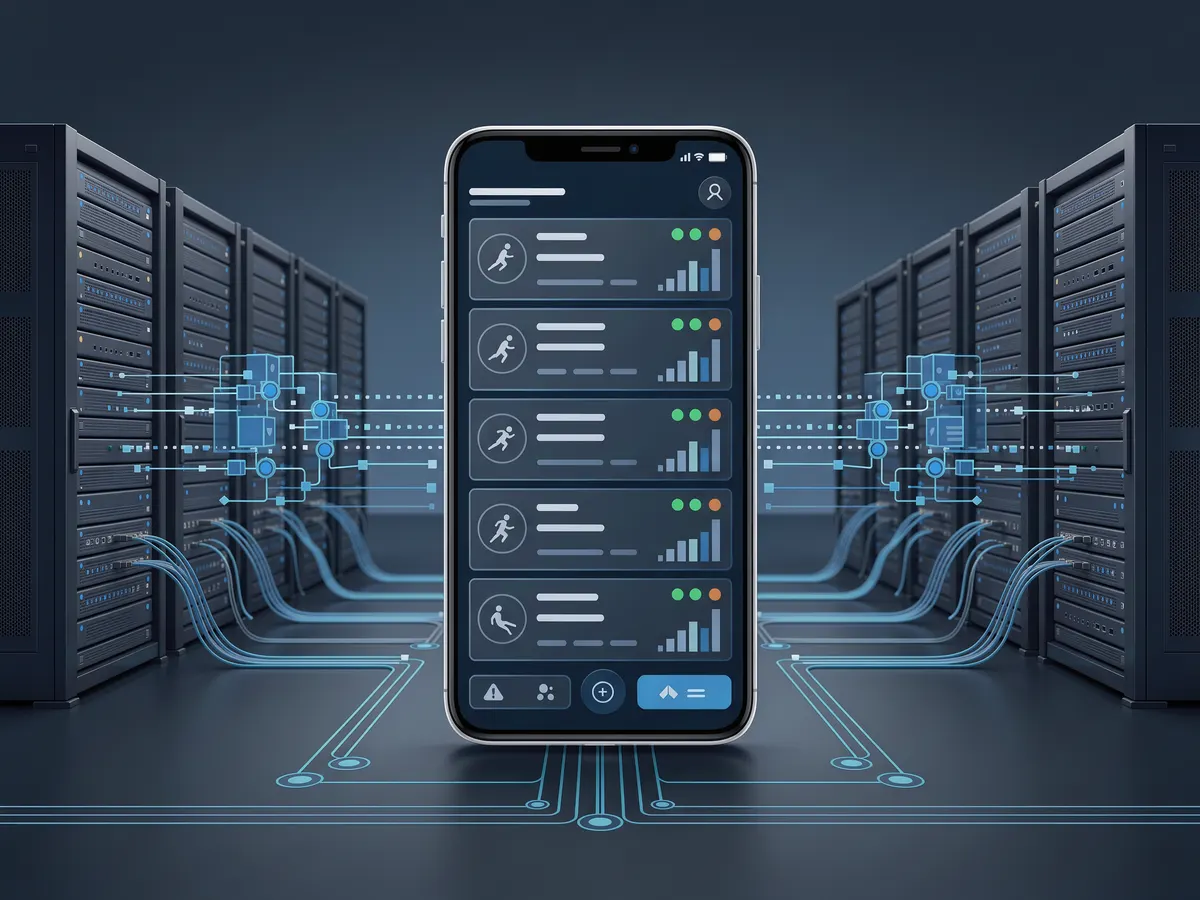
Content licensing works through API integration. The supplier exposes an endpoint carrying events, markets and prices; the operator’s platform pulls that stream, applies its own configuration, and renders it in the app. Updates arrive continuously, which is why your odds flicker mid-match without anyone at the operator touching them.
Pre-match odds compilation
Pre-match pricing starts with a model: historical results, team and player data, injuries, line-up news, weather for outdoor sport. The model produces a set of true probabilities. The supplier then adds a margin, so the implied probabilities across a market sum to more than 100%. A two-way market priced at 1.95 and 1.95 carries about a 2.6% overround, because 1÷1.95 twice gives roughly 102.6%. That surplus is the built-in edge, and it is present in every market you will ever see.
Live and in-play trading
In-play is the harder half. Prices have to be recalculated every few seconds against a live data feed from the venue, suspended on goals, cards and other triggers, then reopened. Traders sit over the automated pricing, adjusting limits, watching liability and spotting when someone is arriving with better information than the model has. This is a 24-hour operation across time zones, and it is the single most expensive thing in a sportsbook. It is also the main reason operators rent rather than build.
How deeply the supplier is embedded depends on the commercial model:
| Model | What the operator takes | Who controls pricing and margin | Typical user |
|---|---|---|---|
| Data feed only | Odds and results, no front end | Operator, applying its own margin over supplied prices | Established books with their own platform and traders |
| Turnkey platform | Sportsbook software plus odds and trading, operator keeps its own licence and brand | Mostly the supplier, with operator-level configuration | Operators scaling into new markets quickly |
| White label | Full product under the supplier’s licence, operator supplies brand and marketing | The supplier and licence holder | New entrants and affiliate-turned-operator brands |
Aggregator platforms sit alongside all three, giving an operator one integration that unlocks dozens of game and content vendors instead of twenty separate technical projects.
Virtual sports: content for the hours when nothing is on
Virtual sports are simulated events, rendered as video, with outcomes decided by a random number generator rather than by athletes. A virtual football league runs a fixture every few minutes, all day, every day. The odds look like real sportsbook prices, but the result is an RNG draw and the return is fixed in the product’s design and published in its game rules, in the same way a slot’s RTP is.
Operators value this for a blunt commercial reason: real sport has dead hours. Tuesday at 11am there is no league football, and in a market where football drives most turnover, a virtual fixture fills the gap. Mini-games and instant formats do the same job on a shorter cycle. For the supplier it is attractive because one engine scales across every client with no trading desk attached.
Be clear-eyed about the difference, though. In-play football pricing can be beaten by someone with faster information. A virtual race cannot be, because there is nothing to know. Form tables in virtual sports describe past RNG output, and past RNG output says nothing about the next draw.
Kiron’s 20-title SportyBet rollout, read as an example
On 13 October 2026, G3 Newswire reported that Kiron had launched 20 titles with SportyBet across Zambia, Kenya, Tanzania, Ghana and Nigeria. According to that report, the rollout spans football, basketball, horse and greyhound racing, motorsport and further virtual formats, with football the largest component: league and single-match products covering England, Spain and Italy, plus Soccer Stars, Kiron’s fast-format iGOAL content, and Virtual World Cup and Virtual Champions League tournament products. Racing content across horses, greyhounds and motorsport rounds it out.
What makes it a useful case is the shape of the deal rather than its size. One supplier, one integration, twenty products, five national markets, and the player in Lusaka or Accra sees only SportyBet. That is sportsbook content expansion as the industry practises it: a catalogue decision made in a boardroom, delivered through an API, surfaced as a new tab in an app.
Why operators rent this layer instead of building it
Four reasons, and they compound. Speed, because a content integration takes weeks while a trading department takes years. Expertise, because odds compilation and live risk management are specialist skills competing for the same small pool of people. Compliance, because an operator entering five African markets is already absorbing five sets of licensing, tax and advertising rules, and has limited appetite to add product development on top. Cost, because a round-the-clock trading desk, the data rights that feed it and the engineers who maintain it are fixed overheads that only pay off at serious scale.
Building in-house makes sense when you are big enough that a fraction of a percent of margin across billions in handle exceeds the cost of the department. Below that threshold, licensing is simply the rational answer, which is why it is the default.
What this means for you, and the bit the industry oversells
Here is where I part company with most explainers on this subject. You will read that better backend content means better odds for bettors. It does not follow, and I would not pick a sportsbook on the strength of which supplier powers it.
The supplier sets a baseline price. The operator then decides the margin it layers on top, the limits it applies, how fast it suspends markets, and how willingly it pays out. Two books running the identical feed can show meaningfully different prices on the same match, because the commercial settings sit with the operator, not the vendor. Market depth and in-play responsiveness do trace partly to the supply chain, so a book on a thin feed cannot offer you deep player markets no matter how good its app looks. But competitiveness of price is an operator choice, and announcements about new content tell you about catalogue size, not about value.
Compare the actual numbers instead. Add up the implied probabilities on a market you bet regularly and see whose overround is smaller. That one calculation tells you more than any supply deal ever will.
Before you choose where to bet
Check that the sportsbook holds a licence valid in your own jurisdiction, and that the licence number resolves to a real regulator register rather than a logo in a footer. The supply chain behind the app is irrelevant if the brand in front of it is not accountable to anyone you can complain to.
And keep the maths in view. Every market described here, real or simulated, carries a built-in margin, which means the house holds the long-run edge by design. Set deposit and time limits before you start, treat any stake as money you can afford to lose, and use the self-exclusion or cool-off tools your operator is required to provide if betting stops being entertainment. If it has become a problem, contact a gambling support service in your country. Gambling is for adults only.
About The Author