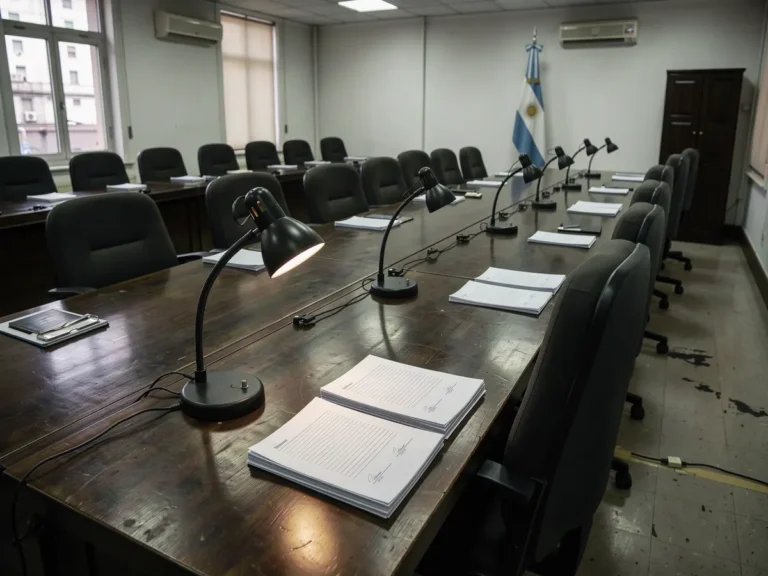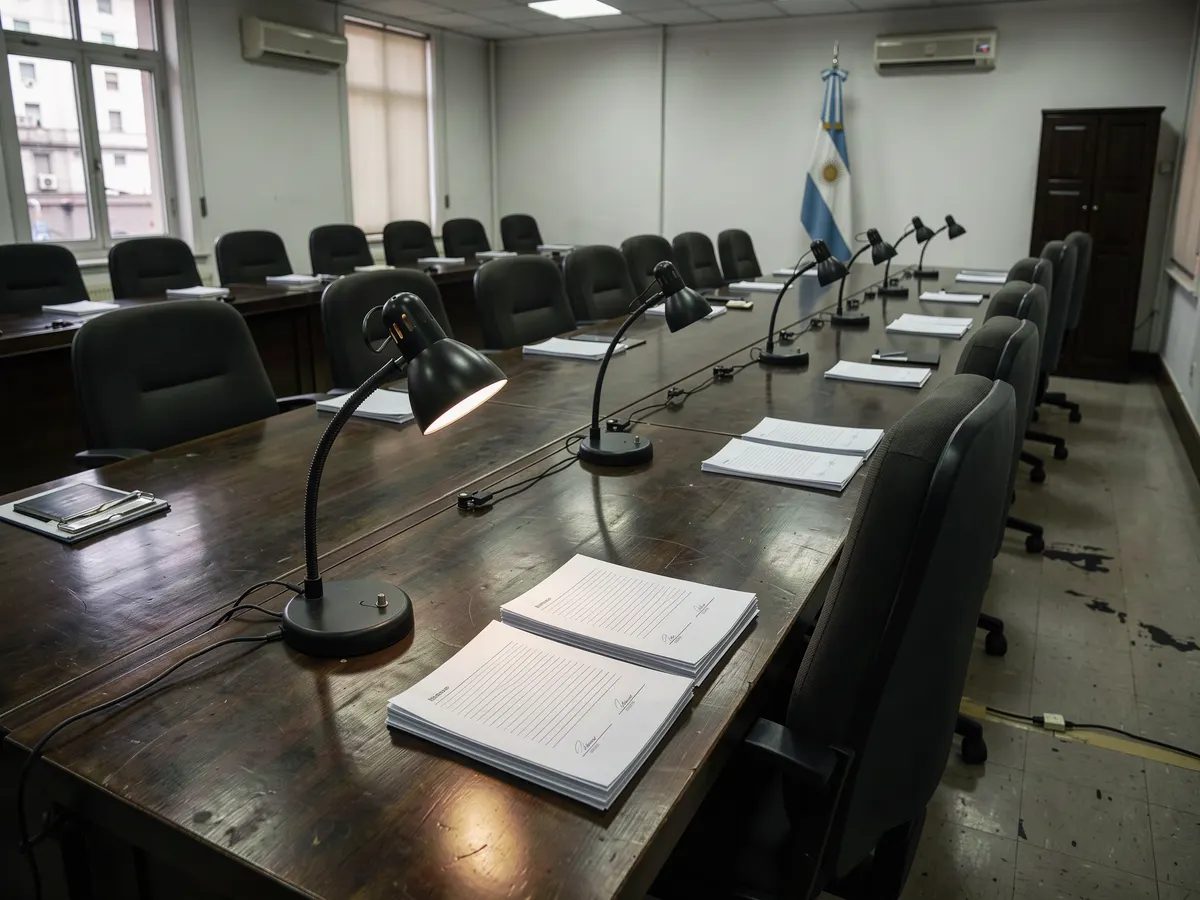
On 14 October, the gambling committee of the Buenos Aires provincial Chamber of Deputies met, discussed, and went home without the signatures needed to send anything to the floor. No vote, no defeat, no headline. That non-event is a better teacher about how online betting regulation actually works than most of the bills that do pass, because it shows where the real friction sits: not in the drafting, but in the committee arithmetic of a single Argentine province.
Where the Buenos Aires online betting bill actually stands
Bill D-3634/26-27 is at committee stage in the Buenos Aires provincial legislature and has not secured the signatures required to advance. According to G3 Newswire’s report, citing Página/12, the provincial Chamber of Deputies’ gambling committee held another discussion session without reaching the threshold for any of the initiatives under consideration to move forward.
The proposal is backed by provincial deputies Facundo Tignanelli and Micaela Olivetto, and has been referred to three committees at once: gambling, general legislation, and budget and taxation. A joint committee meeting was scheduled for 19 October with the provincial lottery regulator, Gonzalo Atanasof, invited to attend, with supporters hoping to reach agreement before a possible lower-house session on 20 October. Opposition lawmakers were pushing for amendments, which leaves both the text and the timetable open.
Speaking at the October meeting, Olivetto described the aim as “a comprehensive legislative tool to address a problem that is devastating young people’s mental health, undermining community life and causing serious problems of addiction, indebtedness and deeply distressing suffering across the province”, per Parlamentario.
Why Argentina writes gambling law province by province
Argentina has no single national online betting licence because gambling regulation was never delegated to the federal government. Under the Argentine constitutional settlement, provinces retain the powers they did not hand over, and gambling has historically been one of them. Each province runs its own lottery or gaming authority, sets its own licensing terms, and collects its own revenue.
That produces an outcome foreign readers routinely misread. The Province of Buenos Aires and the Autonomous City of Buenos Aires are different jurisdictions with different regulators, and both have licensed online gambling in recent years under separate frameworks. A headline saying “Argentina moves on online betting” is almost always describing one province’s bill, with no effect whatsoever on the twenty-odd others. The reach of D-3634/26-27, if it ever clears committee, stops at the provincial border.
It also explains the shape of the fight. A national bill gets one battle in one chamber. A provincial bill of this kind gets referred to several committees, each with its own members and its own reasons to withhold a signature, and the provincial regulator sits in the room as an interested party rather than a neutral referee.
What the bill reportedly proposes
The reporting describes the bill’s purpose, not its clauses. What is on the record is that its sponsors frame it as a comprehensive instrument aimed at gambling-related harm among young people, addiction and indebtedness, and that it touches gambling policy, general legislation and taxation closely enough to be sent to all three committees.
Beyond that, the specifics are not public in the source material, and this is where the standard reading of betting-bill news breaks down. The reflex is to slot any such story into “another market opens up”. A bill driven explicitly by addiction and youth mental-health concerns, in a province where licensed online gambling already exists, is more plausibly about tightening than opening. But plausible is not the same as reported. Until the text or the amendments are published, anyone telling you what tax rate, advertising ban or deposit cap it contains is filling a gap with invention. There are credible accounts linking sports betting to rising demand for mental-health treatment”>measurable harm, which is the kind of evidence sponsors of bills like this one cite, but it does not tell you what any particular draft says.
How do other countries license online betting?
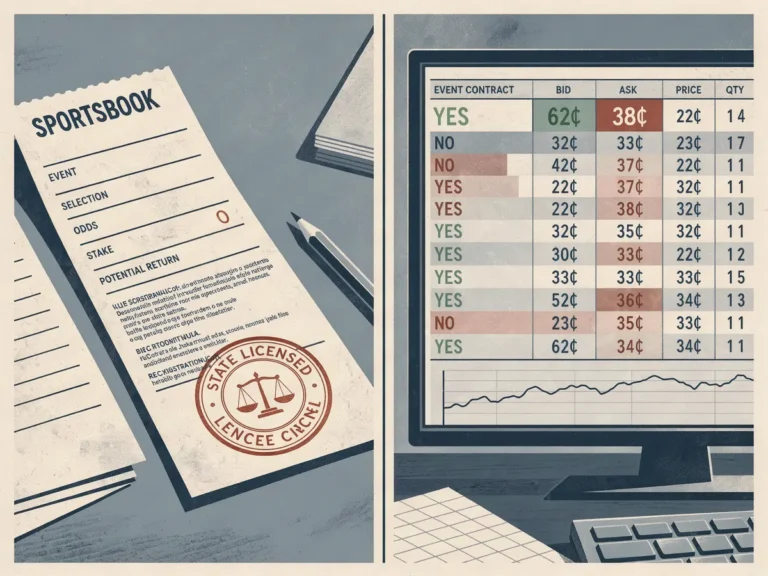
Three structures cover most of the world: one national regulator issuing licences for the whole country, sub-national licensing where states or provinces each run their own regime, and no licensing at all, where offshore sites serve players under local law that is silent, ambiguous or unenforced.
The single-regulator model is the one most familiar from Europe. Great Britain licenses remote operators through the Gambling Commission; Sweden, Denmark and the Netherlands each run comparable national regimes with one authority, one licence list and one complaints path. Brazil took a national route more recently, building a federal licensing regime for fixed-odds betting administered through its finance ministry.
The sub-national model is what Argentina has, and what the United States adopted after the Supreme Court struck down the federal sports betting ban in 2018: legality and licensing are decided state by state, so an operator legal in one state may be entirely absent from the next. Canada sits in a similar position, with provinces responsible for how betting is offered within their borders. India’s long-standing position is likewise state-led, with central intervention arriving later and more unevenly than in the other examples.
| Model | Who issues the licence | Typical examples | What a bettor notices |
|---|---|---|---|
| Single national regulator | One statutory authority | Great Britain, Sweden, Denmark, Netherlands | One licence register, one complaints route |
| National licence for one vertical | A government ministry or agency | Brazil (fixed-odds betting) | Betting licensed, other verticals treated separately |
| State or provincial licensing | Each state or province | United States, Canada, Argentina | Availability and rules change at the border |
| Patchwork with partial central rules | States, plus central intervention | India | Legality depends on where you are and when you ask |
| No local licensing | Nobody locally; offshore licences only | Various grey markets | No domestic recourse if something goes wrong |
The clauses that keep showing up in new betting laws
New online betting legislation converges on four things almost everywhere: operator licensing, player protection, taxation, and anti-fraud obligations. The wording differs; the architecture rarely does.
- Licensing conditions covering corporate fitness, technical certification of games and servers, and periodic renewal rather than a permanent grant. Renewal is the part that gives a regulator ongoing leverage, which is why how casino licence renewals work”>licence renewals matter more than they look.
- Player protection: age verification, self-exclusion registers, deposit and loss limits, reality checks, and restrictions on where and how operators may advertise.
- Taxation, usually split between a licence fee, a levy on gross gaming revenue, and in some markets a tax on player winnings, with part of the proceeds earmarked for treatment and prevention programmes.
- Anti-money-laundering and anti-fraud duties: identity checks, source-of-funds reporting, geolocation, and data-sharing with the regulator and sports integrity bodies.
Those headings are a reasonable guess at the territory a “comprehensive” Buenos Aires bill would cover, given it was routed through budget and taxation as well as gambling. A guess at the territory, not at the numbers.
What a stalled provincial bill tells you about legal betting markets
The broad direction across legal sports betting markets has been from tolerated grey activity toward formal licensing, and the Buenos Aires debate sits at the next stage of that arc: arguing about how tightly to regulate a market that is already licensed. That is a different conversation from legalisation, and it is the one more jurisdictions are now having.
For anyone tracking legality, the practical lesson is to read the jurisdiction before the headline. Check which authority issues the licence, whether it covers the whole country or one state, and whether the operator appears on that authority’s public register. In sub-national systems, that register is the only answer that counts, and it changes at the border.
What the committee stalemate does not tell us is whether the bill passes, what survives the opposition’s amendments, or whether a tighter provincial regime pushes players toward unlicensed offshore sites, which is the standard objection and one the available reporting simply does not settle. Anyone betting in the meantime is better served by the tools that already exist, deposit limits, self-exclusion and cool-off periods, than by waiting to see which version of the text reaches the floor.
About The Author