
A crypto prediction market is not a sportsbook with a crypto skin, and treating it like one is the fastest way to misread the product. A prediction market is an exchange where users buy and sell yes/no contracts on whether a real-world event happens; the price you pay is the market’s implied probability, and the contract settles at its full value or at nothing once the outcome is known. Blockchain.com became the latest large crypto name to go after this market in October 2026, filing licence applications with the US Commodity Futures Trading Commission. The filing is worth understanding now, because the category is arriving in mainstream crypto apps faster than most bettors have formed a view on it.
What an event contract actually is
An event contract is a binary instrument that pays out a fixed amount if a stated outcome occurs and zero if it does not. In US markets these are typically priced between 1 and 99 cents and settle at $1 or $0. Buy a contract on “Team A wins the division” at 62 cents and you have paid 62 cents for a claim worth $1 if it happens. The price is the probability the market is assigning, and 62 cents is the rough equivalent of decimal odds of 1.61.
Two things follow from that structure. First, you are not locked in until resolution: because contracts trade, you can sell your position at whatever the market is paying before the event settles, taking a profit or cutting a loss on a shifting price. Second, someone else on the exchange is on the other side of every contract you hold. That is the mechanical difference from a bookmaker, and most of what follows comes out of it.
Resolution depends on a stated data source. Well-written contracts specify, in advance, exactly what counts as the event occurring and which source determines it. That specification is the thing to read first, because an ambiguous resolution clause is the main way a correct prediction turns into a losing position.
Why crypto platforms want this business
The appeal is structural rather than clever. Event contracts trade continuously, settle without a licensing patchwork across 50 states, and appeal to exactly the kind of user who already holds a self-custody wallet and is comfortable pricing uncertain outcomes. A crypto brokerage with millions of verified accounts can bolt prediction markets onto an existing app and an existing KYC process rather than acquiring customers from scratch. There is also the regulatory angle: a CFTC-registered venue can serve US retail traders nationwide, which no state-by-state gambling licence can do.
What Blockchain.com has filed for
The company, whose global headquarters remains in London and which opened a new US headquarters in Dallas in late 2025, said it has applied to the CFTC for Futures Commission Merchant and Designated Contract Market licences. The FCM registration, processed through the National Futures Association, is what allows a firm to handle derivatives trades and hold client funds. A DCM is a CFTC-registered exchange open to both institutional and retail traders that can clear futures, options and swaps, which is the regulatory route by which a venue is able to run prediction markets at all. The CFTC classifies event contracts as swaps.
Blockchain.com is also applying to offer crypto derivatives to US customers. It already runs perpetual futures and event contracts for international clients, and according to the company’s own announcement earlier in 2026 its self-custodied prediction market offering came through a partnership with Polymarket. The company describes the CFTC applications as a step toward bringing similar products to US users inside the Blockchain.com app. By its own figures it operates in more than 70 countries, has processed over $1.1 trillion in crypto transactions and hosts more than 95 million wallets across 44 million verified accounts. Reporting also points to preparation for a $500 million IPO at a valuation somewhere between $4 billion and $6 billion.
What is not known: whether the applications will be approved, when, which contracts would be listed, or what the fee schedule looks like. These are filings, not a launch. Anyone writing or reading about the product should hold that distinction.
The names already in the queue
If the filings clear, Blockchain.com joins a group that already includes Coinbase, Crypto.com, Gemini and Robinhood among crypto-adjacent brokerages offering regulated prediction products, alongside the established exchange operators the sector grew up around. That is the real signal here. One firm filing is a strategy; five large brokerages converging on the same product in the same year is a category forming.
No house, no vig: the mechanical contrast with a sportsbook
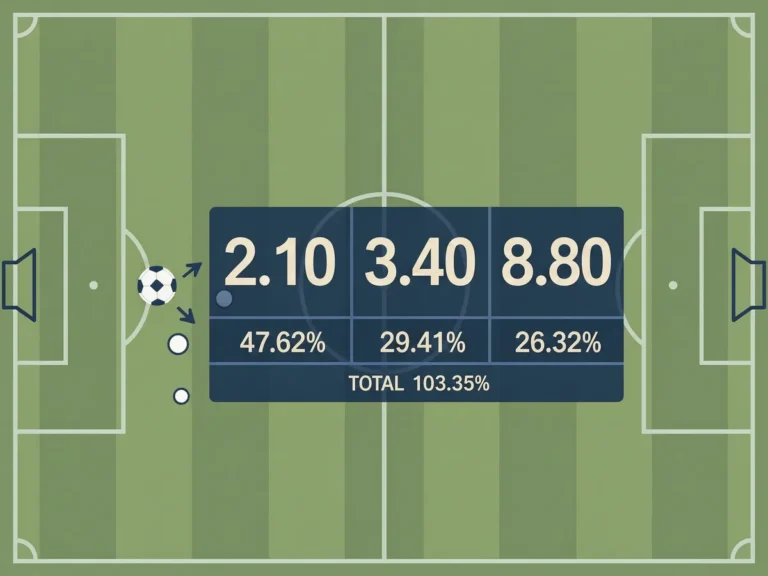
A sportsbook quotes a price that already contains its margin and takes the other side of your bet itself. An exchange matches you against another trader and charges a fee for the service. Price two sides of a sportsbook market at -110 and each implies a 52.38% chance; together that is 104.76%, an overround of roughly 4.76%. On an exchange, the two sides of a clean binary market tend toward summing to the contract’s full value, and the venue’s revenue arrives as trading or settlement fees instead.
| Event contract on a registered exchange | Sportsbook bet | |
|---|---|---|
| Who is on the other side | Another trader | The operator |
| How the price is set | Supply and demand in an order book | Set by the operator, margin built in |
| Where operator revenue comes from | Trading and settlement fees | The overround on posted odds |
| Exiting before resolution | Sell the position at the market price | Cash out at the operator’s discretion and price |
| How outcomes resolve | Stated data source in the contract terms | Operator’s rules and grading |
| US oversight | CFTC, as a derivatives market | State gambling regulators |
The “no house edge” framing that follows from this is accurate about structure and misleading about outcomes. Fees are still a cost, and on thin markets the spread between the best bid and the best offer can cost you more than a sportsbook’s margin would. A contract with real two-way volume on a major election or a major league game may genuinely price tighter than a bookmaker. A niche contract with almost no one trading it prices however the one willing counterparty wants. Liquidity, not the absence of a house, is what determines whether the exchange model is actually cheaper for you.
Regulated, but by whom exactly
US prediction-market venues are regulated as derivatives exchanges by the CFTC rather than licensed as gambling operators by state regulators. That is the whole legal basis of the category, and it is also the source of the friction. Several state gambling regulators have argued that some contracts, particularly those on sporting events, function as sports betting and should fall under state law and state licensing. The CFTC has codified a rule stating that casino-style wagers, including sports bets, are not swaps, while classifying event contracts as swaps, which puts a great deal of weight on exactly where that line is drawn for any particular contract.
That question is not settled, and the honest position is to say so rather than to predict an outcome. Readers should follow CFTC rulemaking and the relevant litigation directly rather than take any operator’s or any publisher’s characterisation of legality as final, including this one.
Underneath the legal argument sits a trade-off with no clean answer. Federal derivatives oversight brings a serious rulebook on market conduct, custody of client funds and exchange operation, and it brings nationwide access. What it was never built to do is manage gambling harm. State gambling frameworks come with deposit limits, self-exclusion registers, affordability thinking and advertising rules; a derivatives exchange has no equivalent obligation to offer a player a cool-off period. You can prefer either regime, but you cannot have both at once, and a bettor moving from a licensed sportsbook to an event-contract venue should know which protections they are leaving behind.
Before you fund an account
Treat this as a speculative product and size your exposure accordingly. The practical considerations worth checking first:
- Funding is usually in crypto or stablecoin, so the asset you deposit can move in value independently of your position, and self-custody shifts the loss risk for keys and transfers onto you.
- Liquidity is uneven. Headline markets trade heavily; long-tail contracts may have wide spreads and no realistic exit before settlement.
- Fee structures differ by venue and are not comparable to a sportsbook’s vig at a glance. Find the trading fee, the settlement fee and any withdrawal cost before depositing.
- Read the resolution terms. Which data source decides the outcome, and what happens if the event is cancelled, delayed or ambiguous.
- Regulatory status is in motion. Products available today can be restricted, delisted or geo-blocked, and in many jurisdictions outside the US access may not be permitted at all.
- KYC still applies on regulated venues, so expect identity verification before funding or withdrawal.
None of this is investment advice and none of it describes a reliable way to make money. Binary contracts resolve at zero more often than new traders expect. Stake only what you can afford to lose, set your own limits before you start rather than mid-session, and if the activity stops feeling like a considered decision, use whatever cool-off or support options the platform and your local services provide.
What is still unsettled
The direction of travel is clear enough: more large crypto brokerages are filing for prediction-market permissions, and the product is heading into apps that tens of millions of people already have on their phones. What has not been tested is how these markets behave when a contested resolution lands on a high-volume contract, how the state-versus-federal question is finally answered, and whether a derivatives regulator ends up carrying responsibilities for consumer protection that no one has yet assigned to it. Those answers will arrive through rulings and incidents rather than press releases, and until they do, the sensible stance toward crypto prediction markets is to understand the mechanics well, watch who decides what, and keep the stakes small.
About The Author





5 thoughts on “Crypto Firms Are Entering Prediction Markets: What Bettors Should Know”