What self-exclusion actually means
Self-exclusion is a voluntary, binding request to have your gambling account blocked for a fixed minimum period. Once it is set, the operator must refuse your deposits, close or freeze the account, stop marketing to you, and block attempts to re-register. You ask for it. You cannot talk your way out of it before the term ends.
That is the theory. The first thing any player wants to know is how long the block lasts, and that is often the one thing not written down. Research published by Casino.net’s Research Lab examined 903 self-exclusion listings across 540 casino brands in 64 markets and found that only 409 recorded an exclusion period. The researchers were careful about what this does and does not show: a missing duration in their database does not mean the operator’s exclusion is ineffective, only that the duration was not captured in the information reviewed. Fair enough. It is still the problem in miniature. A protection you cannot read is a protection you cannot plan around.
How a self-exclusion program is set up
Most self-exclusion programs run on three steps: you choose a minimum duration, you confirm your identity, and the operator closes access and flags your details so new sign-ups are refused. The common duration tiers are six months, one year, five years and permanent, though some operators offer shorter options and some offer only one.
Verification usually means your name, date of birth, email, phone number and the payment details on file. This is not bureaucracy for its own sake. The block only works if the operator can recognise you when you come back with a new email address, which is exactly what people do when the impulse returns at 2am.
Treat it as irreversible by default. A well-run scheme will not lift an exclusion on request mid-term, and after the minimum period expires it generally does not simply lapse. You have to actively ask for reinstatement, and a further waiting period normally applies before accounts reopen. If an operator offers to switch it off because you asked nicely, that is not a self-exclusion, it is a pause with a formal-sounding name.
Operator-level exclusion
Operator-level exclusion covers one brand, and sometimes the other brands that sit under the same licence or company group. The useful question to ask support, in writing, is whether the exclusion extends across the group’s full portfolio or stops at the site you are on. Answers vary more than you would expect, and some groups run a dozen casino brands on shared infrastructure.
This is the weakest form of the tool by design. It does nothing about the next casino in the search results.
Multi-operator and consolidated schemes
A multi-operator exclusion scheme blocks you across every licensed operator in the scheme with one registration. GAMSTOP is the best-known example: a single sign-up blocks access to all online gambling businesses licensed in Great Britain, with minimum periods of six months, one year or five years. It is a Great Britain scheme and it applies to GB-licensed sites only.
No equivalent single national register exists in India. Regulation there is a patchwork by state and by the licence an operator holds, so what you get depends on where the operator is registered and which rules it answers to. That makes it worth knowing what a casino licence actually obliges an operator to do before you rely on its responsible gambling page.
Great Britain also produced the highest documentation rate in the Casino.net study: 117 of 132 listings, or 88.6 per cent, specified a period, the best result among the 31 markets with at least ten listings. The tempting reading is that mature regulation produces clearer disclosure. It is a reasonable guess. One dataset of documented values does not prove it, and I am not going to pretend otherwise.
Self-exclusion, cooling-off and deposit limits do different jobs
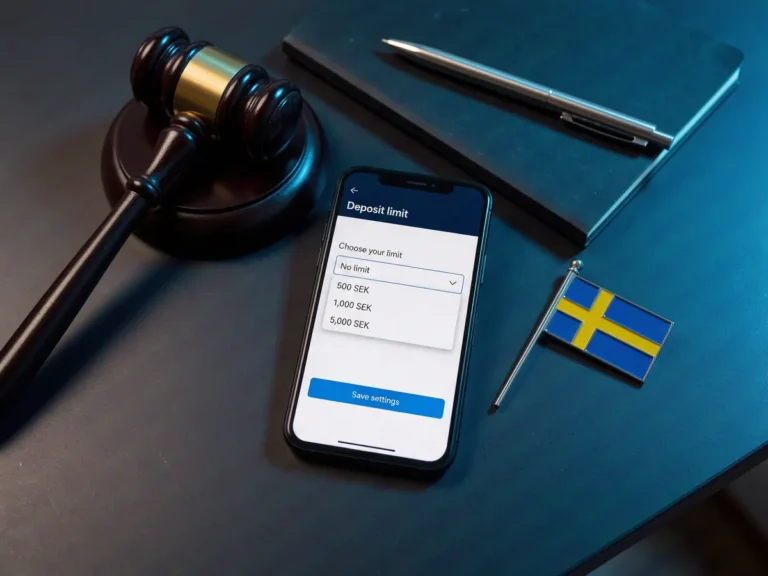
These three get used interchangeably in casino marketing and they are not the same instrument. A cooling-off period, also called a time-out or break in play, is a short freeze that expires on its own. A deposit limit caps spending while you keep playing. Self-exclusion removes access entirely.
| Tool | Typical duration | Reversible? | What it is for |
|---|---|---|---|
| Cooling-off / time-out | 24 hours to several weeks | Expires automatically; usually cannot be cut short | A deliberate short break after a bad session |
| Deposit limit | Daily, weekly or monthly, ongoing | Decreases apply at once; increases usually require a waiting period | Capping spend without stopping play |
| Loss and session limits | Per session or per period | Same asymmetry as deposit limits | Controlling time and net losses |
| Self-exclusion (operator) | 6 months to permanent | Not during the term; reinstatement must be requested | Stopping access to one brand or group |
| Multi-operator scheme | 6 months, 1 year, 5 years | Not during the term; active request plus waiting period after | Stopping access across all licensed sites in that market |
If you are weighing one against the others: a time-out is for a player who wants to interrupt a pattern, self-exclusion is for a player who has already decided that the pattern is the problem. Picking the shorter tool because the longer one feels dramatic is the most common misstep, and it costs money precisely because the time-out ends by itself while you are not paying attention.
Why the rules read differently on every site
Self-exclusion rules vary between casino sites because there is no shared vocabulary, no common set of duration tiers and no single verification standard across operators or regulators. One site calls a 48-hour freeze a cooling-off period; another calls the same thing a time-out; a third files both under account closure. Minimum terms differ, reinstatement rules differ, and the scope of who is covered differs.
That inconsistency is the gap industry commentary has been pointing at since the Casino.net figures appeared, and the complaint is specifically about documentation rather than intent. The study drew on an operator database of 1,064 live operator-market records and 4,228 responsible gambling values, including deposit limits and time-outs, as it stood in early October 2026. Fewer than half the self-exclusion listings in it stated a period. Whatever is happening behind the scenes at those operators, the player reading the page cannot tell what they are agreeing to.
What clearer wording would actually buy players
Clear, standardised rules improve online casino player protection mainly through informed consent: a player who knows the minimum term is six months, that it cannot be lifted early, and that it covers eleven sister brands is making a real decision. A player reading “your account will be closed for a period” is guessing.
Clarity also closes the small loopholes that undermine the tool, chiefly ambiguity about scope and about what happens when the term expires. And it changes follow-through. People abandon confusing processes, especially processes they are reluctant to start.
None of this makes self-exclusion foolproof, and the honest framing matters here. A perfectly worded scheme still depends on the operator enforcing it, on the player not routing around it, and on the rest of the market being inside the same net. Clearer rules make the tool usable. They do not make it airtight.
Where self-exclusion stops working
The limits are worth knowing before you rely on it:
- Unlicensed and offshore sites sit outside every scheme. They are not bound by a regulator’s register and many actively market to excluded players.
- Second accounts opened with a different email, phone number or payment method can slip through weaker operator-level checks, though verified identity data makes this harder.
- Platforms outside the scheme’s network remain open, including sites licensed in other jurisdictions and, depending on the scheme, land-based venues.
- Other gambling verticals may not be covered. Some schemes cover online casino and sportsbook only, leaving lotteries or retail betting untouched.
- Advertising can still reach you through affiliate sites, social feeds and search, since the operator only controls its own direct marketing.
Gambling adverts in particular keep arriving after the accounts close, which is a separate fight. If that is your experience, how targeted gambling ads are served and how to cut your exposure is the practical companion to this.
Doing it properly: a short checklist
- Open the operator’s responsible gambling page and find the self-exclusion section, not the account closure section. They are different things.
- Check the listed durations and, if none are listed, ask support in writing what the minimum term is and what happens when it ends.
- Ask whether the exclusion covers the operator’s other brands and which ones.
- Choose the longest period you are confident about rather than the shortest you can tolerate. Extending later is easy; shortening is meant to be impossible.
- Complete identity verification fully. Partial details weaken the block against re-registration.
- If your market has a multi-operator scheme, register with it as well as with the operator, and keep the confirmation email.
- Remove the pressure points around it: uninstall apps, cancel saved payment methods, and note the reinstatement rules so the date does not take you by surprise.
Set a deposit limit at the same time if you are not ready for full exclusion, and use the self-assessment tools most licensed operators link from the same page. If gambling has stopped being a leisure spend, accredited support organisations such as GamCare and Gambling Therapy provide free, confidential help, and your operator is required to publish links to the services recognised in your jurisdiction. Use those listed sources rather than a number you found in a forum.
What the 903 listings tell us is how many operators wrote the period down. They do not tell us how many honour it quietly and well, and nobody has published that number. Until someone does, the sensible assumption is that documentation quality is the only signal you can actually check before you commit, which is an uncomfortable thing to lean on, and currently the best thing available.
About The Author