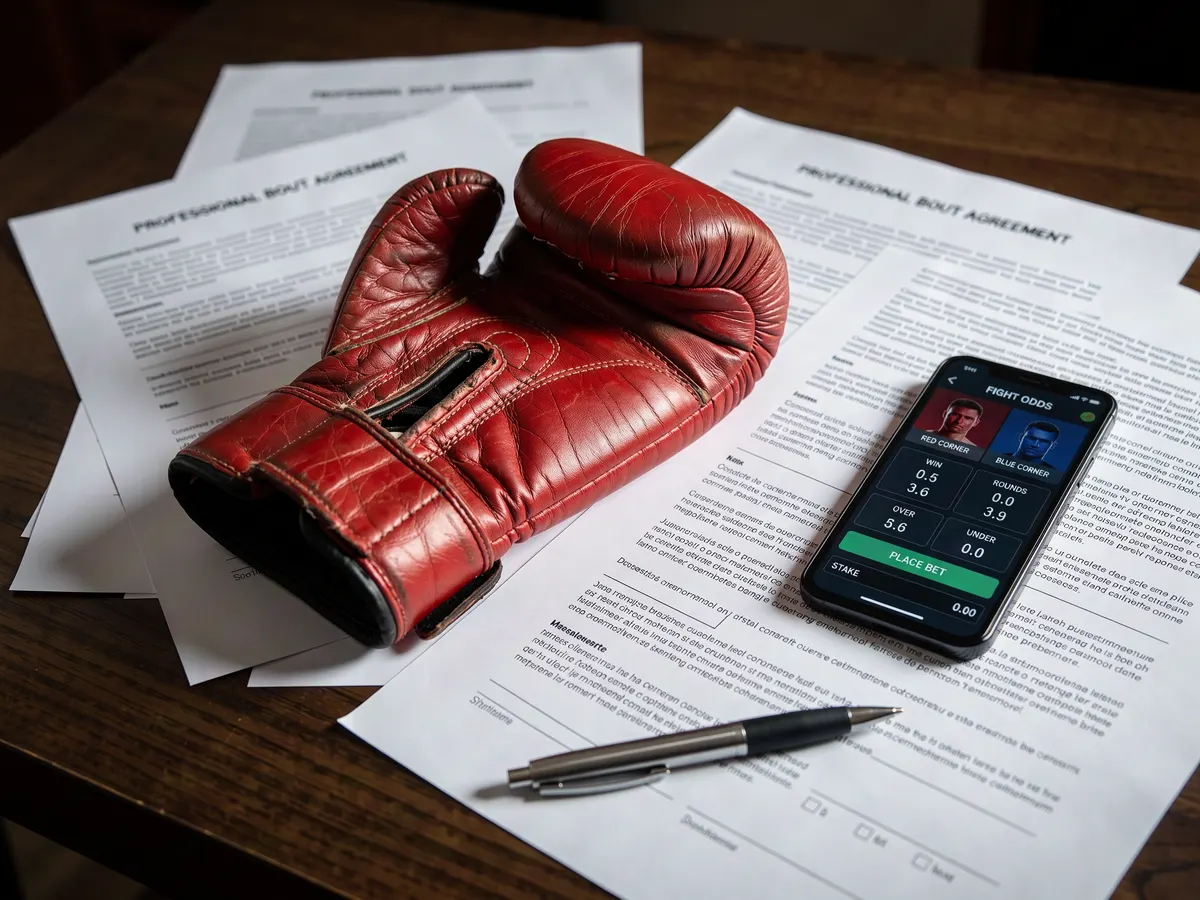
A £1.5m claim lands in London’s High Court
An operator is suing a former heavyweight champion over a promotional deal it says he walked away from. According to reports published on 15 October 2026, Mike Tyson and his company Tyrannic LLC face a £1.5m claim in London’s High Court brought by Medier Ltd, the operator behind the Rabona brand, over an alleged breach of a sponsorship agreement signed in January 2024. Nothing has been proven, and both sides are entitled to their case. What the filing does illustrate, cleanly, is something bettors routinely get wrong: a celebrity gambling endorsement lawsuit only becomes possible because the endorsement was a commercial contract in the first place, not a judgement about the product.
What the reports actually allege
Medier claims Tyson backed out of agreed promotional commitments for Rabona after securing a far more lucrative Netflix fight deal, valued at around $15 million, which allegedly made the sponsorship less attractive. That fight, against Jake Paul, reportedly paid Tyson around $20 million in total. The substance as reported is the parties, the amount, the venue, and the alleged reason for the breach.
Everything beyond that is open. This is a live civil dispute, no court has ruled, and the reported figures come from one side’s claim as summarised in press coverage. Tyson’s response has not been reported in the material available here. Treat the case as unresolved, because it is.
The useful part for a bettor is not who wins. It is the shape of the thing. A sponsorship that looked, in advertising terms, like an endorsement of Rabona was in legal terms a schedule of deliverables with a price attached, and the dispute is about whether those deliverables were delivered.
How celebrity betting sponsorship deals are put together
Most athlete-fronted gambling deals are built from the same components: a fee, a list of obligations, and clauses governing when either side can walk.
- A fee structure, usually a flat retainer or appearance fee, sometimes with performance-linked top-ups tied to campaign reach or player sign-ups.
- Image rights, licensing the use of the person’s name, likeness and footage across specified markets and channels for a fixed term.
- Deliverables, meaning a defined number of social posts, shoots, event appearances or branded content pieces.
- Exclusivity, barring the ambassador from promoting any competing operator during the term.
- Termination and morality clauses, letting either party exit on reputational grounds or on breach.
Read that list again and note what is absent. There is no clause in which the ambassador certifies the operator’s licensing, audits its random number generators, or reviews its withdrawal processing times. Nobody writes that clause, because it is not what either party is buying.
Why these contracts end up in court
Disputes in sports sponsorship almost always turn on money and obligations rather than product quality. An athlete’s commercial value can rise sharply mid-term, as the reported Tyson situation suggests, and a deal signed at one valuation can look badly priced a year later. Deliverables are often loosely defined. Exclusivity clauses collide when a bigger offer arrives. Reputational events trigger termination arguments on both sides.
What you will struggle to find is a sponsorship case litigated on the grounds that the operator’s games were unfair or its payouts unreliable. That is not an accident of the law. It is evidence that these contracts never concerned themselves with those questions.
Why operators pay for a famous face at all
The marketing logic is borrowed trust. A gambling operator competing in a crowded market has a recognition problem and a credibility problem, and a well-known athlete solves the first one immediately while appearing to solve the second. Familiarity reads as legitimacy. A brand nobody has heard of looks risky; a brand standing next to a world champion looks established, whether or not anything about it has changed.
There is also reach and normalisation. A sports star betting sponsorship places the operator inside a context the audience already trusts, next to the sport itself, which softens the sense that this is a financial product with a built-in house edge. The sign-up cost per customer falls. That is the whole business case, and it is a perfectly ordinary advertising strategy. It is simply not a vetting process, and it was never presented as one in the contract.
Does a celebrity endorsement mean a betting site is safe or fair?
No. An ambassador deal is a paid marketing agreement between two commercial parties and carries no information about an operator’s licence status, game fairness, segregation of player funds, or willingness to pay withdrawals on time. An athlete casino ambassador is selling attention, not certification.
The reported Tyson case makes that concrete in an unusually blunt way. The relationship between the star and the brand has, on the operator’s account, turned adversarial over money. If the endorsement had ever been a statement of belief in the product, you would expect disputes to be about the product. They are about the deal. A face that can be contracted in for a fee and litigated over eighteen months later tells you only that a fee was agreed.
The cost of misreading this is specific. Players who pick an operator because they recognise its ambassador skip the checks that would have surfaced a missing licence, a pattern of blocked withdrawals, or bonus terms that make a balance unwithdrawable. The endorsement did not protect them, and when things go wrong the ambassador has no obligation, contractual or otherwise, to help.
The signals that actually carry information
Before depositing anywhere, check five things that can be verified by someone other than the operator’s marketing department. Each takes a few minutes, and together they tell you more than any campaign ever will.
| Signal | What it tells you | Where to verify it |
|---|---|---|
| Licence and regulator | Which authority supervises the operator and whether the licence is current and covers your country | The regulator’s own public licence register, not the site’s footer badge |
| Independent testing | That games and RNGs have been tested by an external agency such as eCOGRA, GLI or iTech Labs | The testing body’s certificate or verification page |
| RTP and payout transparency | Whether the operator publishes game RTP figures and payout reports instead of vague “great odds” language | Game info screens and published audit summaries |
| Complaint record | How the operator behaves when a withdrawal is disputed | Independent complaint mediation services and dated user reviews |
| Responsible gambling tools | Whether deposit, loss and session limits, cool-off and self-exclusion are actually available in-account | The account settings before you deposit, not the terms page |
If a licence number does not appear on the regulator’s register, nothing else on the list matters. Start there.
Warning signs worth acting on
Celebrity-fronted campaigns are not inherently a problem. Licensed operators in regulated markets run them constantly. The signs below are what separate a normal advertising spend from something you should decline.
- No visible licence number, or a badge image that links nowhere and cannot be matched to a regulator’s register.
- Bonus terms that hide the wagering requirement, the game weighting or the maximum cashout until after you have deposited. A 30x requirement on a £1,000 bonus means £30,000 wagered before withdrawal, and that number should be stated upfront.
- Pressure-style advertising, with countdown timers, “last chance” framing or messaging that treats betting as a way to make money.
- Withdrawal policies that are vague about timescales, KYC requirements or fees, especially where deposits are instant and cashouts are not.
- No functioning limit-setting or self-exclusion tools inside the account.
What star power buys, and what it does not
The Medier claim against Tyson and Tyrannic LLC will be decided on contract law, not on anything a bettor cares about, and it may well settle quietly. The pattern behind it will outlast the case. Athlete-fronted gambling marketing works, which is why operators keep buying it and why regulators in several markets keep narrowing what it is allowed to say.
What remains genuinely open is whether audiences ever learn to discount it. Until they do, the practical move is small: treat a famous face as the advertisement it is, verify the licence yourself, read the bonus terms before depositing, set a deposit limit you would be comfortable losing, and use cool-off or self-exclusion tools if play stops feeling like entertainment. The house holds a mathematical edge in every game regardless of who appears in the advert. If gambling is causing harm, contact a support service such as GamCare or GambleAware (formerly known as BeGambleAware).
About The Author



1 thought on “Mike Tyson’s £1.5m Gambling Sponsorship Lawsuit: Why Celebrity Endorsements Don’t Prove a Betting Brand Is Trustworthy”