When you read that two iGaming companies have signed a “multi-vertical” deal, do you picture a sportsbook tab appearing next to the casino lobby on your favourite site? Most readers do. It is usually the wrong picture, and the gap between what these announcements say and what people assume they say is where the confusion starts.
Multi vertical iGaming partnerships are agreements where one supplier covers several product lines for a partner under a single contract, rather than signing a separate deal per product. The ICONIC21 and Advabet agreement is a clean example of the type, and a useful one for seeing exactly how far a backend deal travels before it reaches the screen you tap on.
What ICONIC21 and Advabet actually signed
ICONIC21 signed a partnership agreement with the iGaming platform provider Advabet, also known as Adwa, to distribute its gaming portfolio across Adwa’s operator network and managed brands. The deal was reported by G3 Newswire on 15 October 2026. It covers all major gaming verticals within the ICONIC21 portfolio, with an initial rollout across Adwa’s B2C brands before extending to its wider B2B ecosystem.
The content involved is ICONIC21’s strongest-performing categories: slots, virtual games and live casino. Named titles include content from Gravity Games, the company’s flagship live and virtual products, and the virtual game iDealer Blackjack. Advabet’s side of the business is tailored online casino solutions, platform technology, gamification tools and gaming integrations. ICONIC21’s Chief Commercial Officer, Alina Mihaela Popa, framed Adwa’s appeal in terms of flexibility and tailored casino solutions.
Note what is not in that list. No sportsbook. No odds feed. The verticals being bundled here sit inside the casino category.
“Multi-vertical” is a slippery term, and that matters
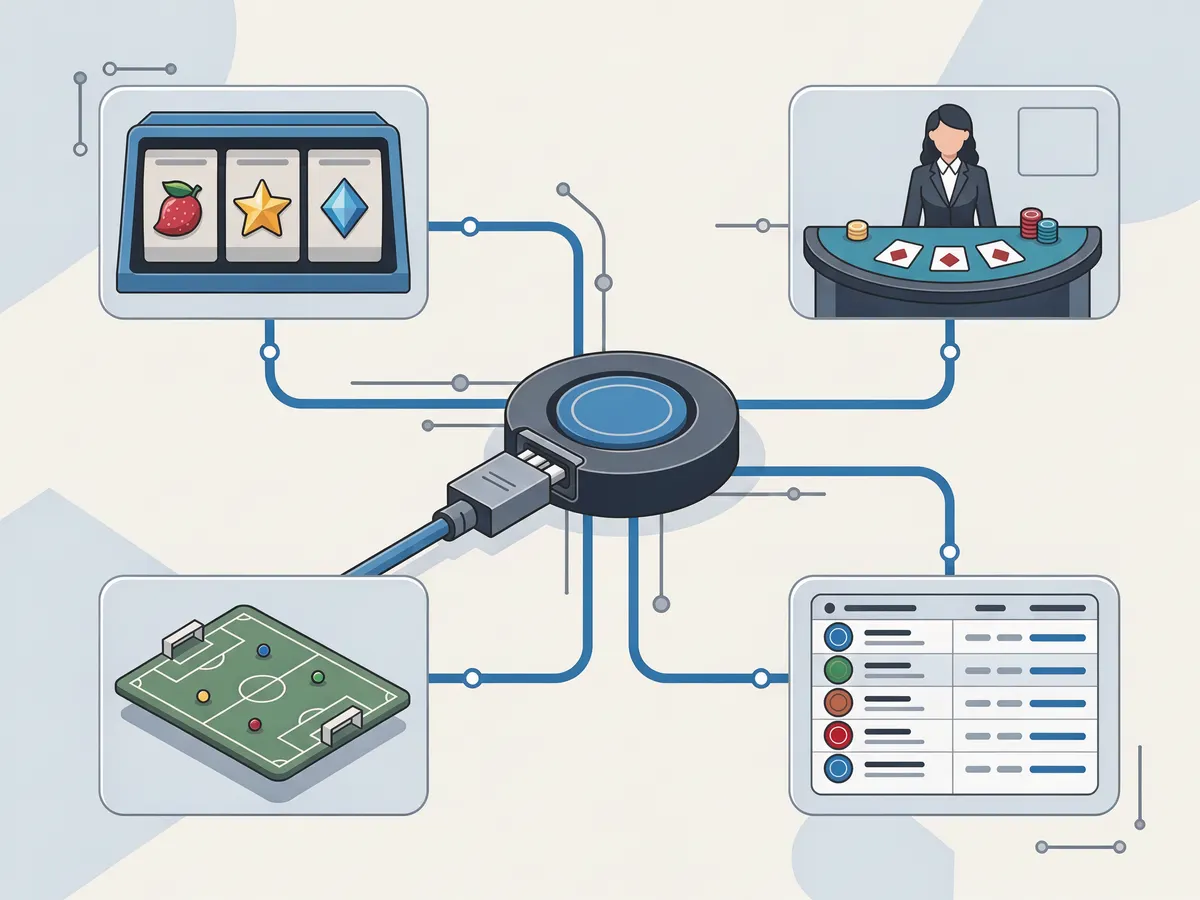
In iGaming B2B language, a vertical is a product line, and the word is used at two very different zoom levels. At the widest level it separates casino from sports betting from poker from lottery-style games. One level down, inside casino alone, it separates slots from live dealer from virtual games from instant-win titles. A deal described as multi-vertical can mean either.
The ICONIC21-Advabet agreement is the second kind: several casino content categories moving through one integration. Plenty of other announcements use the same phrase for the first kind, where a platform genuinely wraps casino and sportsbook into one stack.
Casino and sportsbook integration explained
Casino and sportsbook integration means one platform runs both products behind a single account, wallet and bonus engine, so a player deposits once and moves between a football market and a slot without a second login or a transfer screen. Structurally it looks like this: a platform provider holds the player account and wallet, an aggregation layer pipes in casino content from multiple studios, a sportsbook supplier feeds markets and prices, and the operator puts a brand and a front end on top.
Reading a content deal as a sportsbook deal costs you something concrete: you wait for a product that was never part of the agreement, and you give a site credit for breadth it has not announced. The ICONIC21 news tells you which games may show up. It tells you nothing about whether you will be able to bet on cricket there.
Why suppliers keep bundling product lines into one contract
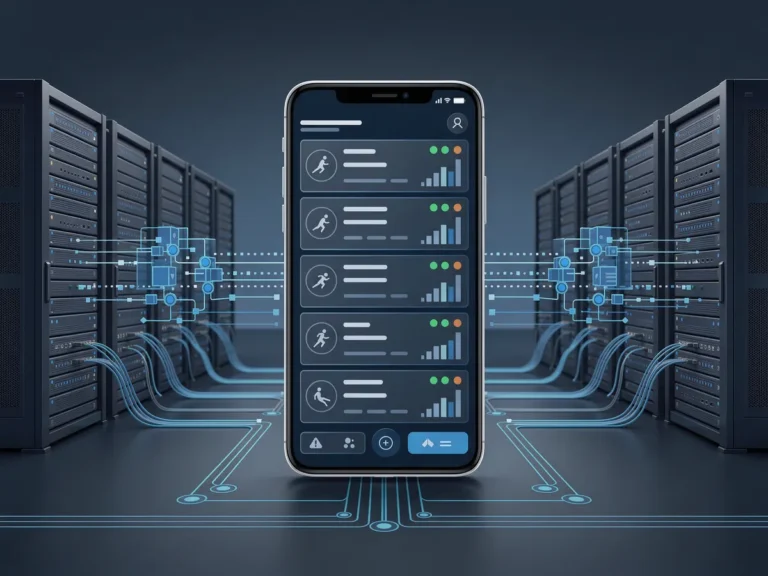
The logic is integration cost. Every separate supplier an operator adds means its own commercial negotiation, technical certification, reporting format and support channel. Bundling several verticals behind a single API collapses that work into one piece of plumbing, which is the practical appeal of turnkey gaming solutions for operators who would rather not maintain a dozen connections.
Three structural pressures push the same way. Smaller operators cannot staff an integration team per studio, so a fuller product from one contract is the only realistic route to a competitive lobby. Suppliers want distribution breadth, and a platform with an existing operator network delivers many brands from one signature, which is exactly the shape of the Advabet deal: B2C brands first, then the wider B2B ecosystem. And regulated markets keep adding compliance work per supplier, which rewards consolidation in the iGaming supply chain.
This is also why so much industry news now consists of platform-to-studio announcements rather than player-facing launches. The same reflex shows up in the relationship-building side of the business, from conference deals to the Alea and ALL IN Platform partnership events that exist mainly to keep these supply chains warm.
What could change in the lobby you use
These are possible effects of this type of deal, not confirmed outcomes of this one. Treat them as the direction the plumbing points, nothing firmer.
- New studios may appear in a casino lobby faster, because the operator’s platform already carries the content and enabling it is a configuration change rather than a fresh integration.
- Game categories may broaden in one go, with live dealer and virtual titles arriving alongside slots instead of months apart.
- A single account and wallet may cover more product types, where the platform runs them together.
- Content refresh cycles may shorten, since new releases from a connected studio reach the operator through an existing pipe.
Each of those is a maybe. The deal creates the option; the operator decides whether to use it.
What consolidation does not buy you
A platform or content deal changes what an operator can offer, not the terms on which it offers it. Nothing in an agreement of this kind improves the return to player on a slot, tightens a bookmaker’s margin, or enlarges a welcome bonus. RTP is set by the game’s maths and configured within the studio’s permitted range; the house edge is the inverse of it either way. Wagering requirements live in the operator’s bonus terms.
Market availability is a separate question again. Whether any particular title or vertical goes live in a given jurisdiction depends on local licensing and certification, which is the same constraint that makes a single-market launch, like Kendoo’s regulated Belgian rollout, newsworthy in its own right. Indian players should assume nothing about local access from a supply deal reported in a trade outlet.
Roughly, here is who controls what in this chain:
| What a player notices | Typically decided by |
|---|---|
| Which studios appear in the lobby | Operator, from what its platform carries |
| Game RTP and volatility | Game studio, within certified ranges |
| Bonus size and wagering requirements | Operator |
| Sports odds and market margins | Sportsbook supplier and operator trading team |
| Whether a product is legal and live in your market | Regulator and licensing |
Signals worth checking on an operator site
Four things tell you a backend deal has reached the front end. A sportsbook or virtual sports tab sitting inside the same navigation as the casino, with no separate sign-in, points to one platform behind both. A single balance that funds a slot spin and a bet without a transfer screen points the same way. New provider names in the lobby’s studio filter, appearing in clusters rather than one at a time, usually means an aggregation layer was switched on. And a steady drip of unfamiliar live and virtual titles, rather than slots only, suggests a multi-category content pipe.
Here is the trade-off nobody in these press releases wants to name. The same consolidation that fills a lobby quickly also makes lobbies interchangeable. If a dozen brands buy from the same platform, they stock largely the same games, and the thing that used to distinguish a site, a curated selection, flattens out. Breadth arrives; so does sameness. Whether that is a gain depends entirely on whether you were short of games in the first place, which most players are not.
None of this changes the arithmetic of playing. More titles in a lobby is a wider menu, not a better one, and every game on it carries a house edge. Set deposit and loss limits before the next batch of content lands, and treat any session as spending rather than earning.
About The Author