An iGaming VIP loyalty program is a system for finding the small group of players who generate most of an operator’s revenue, then spending money to keep them. That definition sounds simple until you ask who does the finding, and how fast. The Playa, a provider of AI-powered personalisation software, has launched VIP Intelligence, described in Focus Gaming News’ report on the launch as the first standalone product in the industry built specifically for VIP management. According to that report, its High-Value Player Detection flags VIP potential within a player’s first 24 hours. Which means the interesting question for players is no longer whether operators track you. It is what they do with a judgement made on day one.
What VIP Intelligence is, and why a purpose-built tool is a first
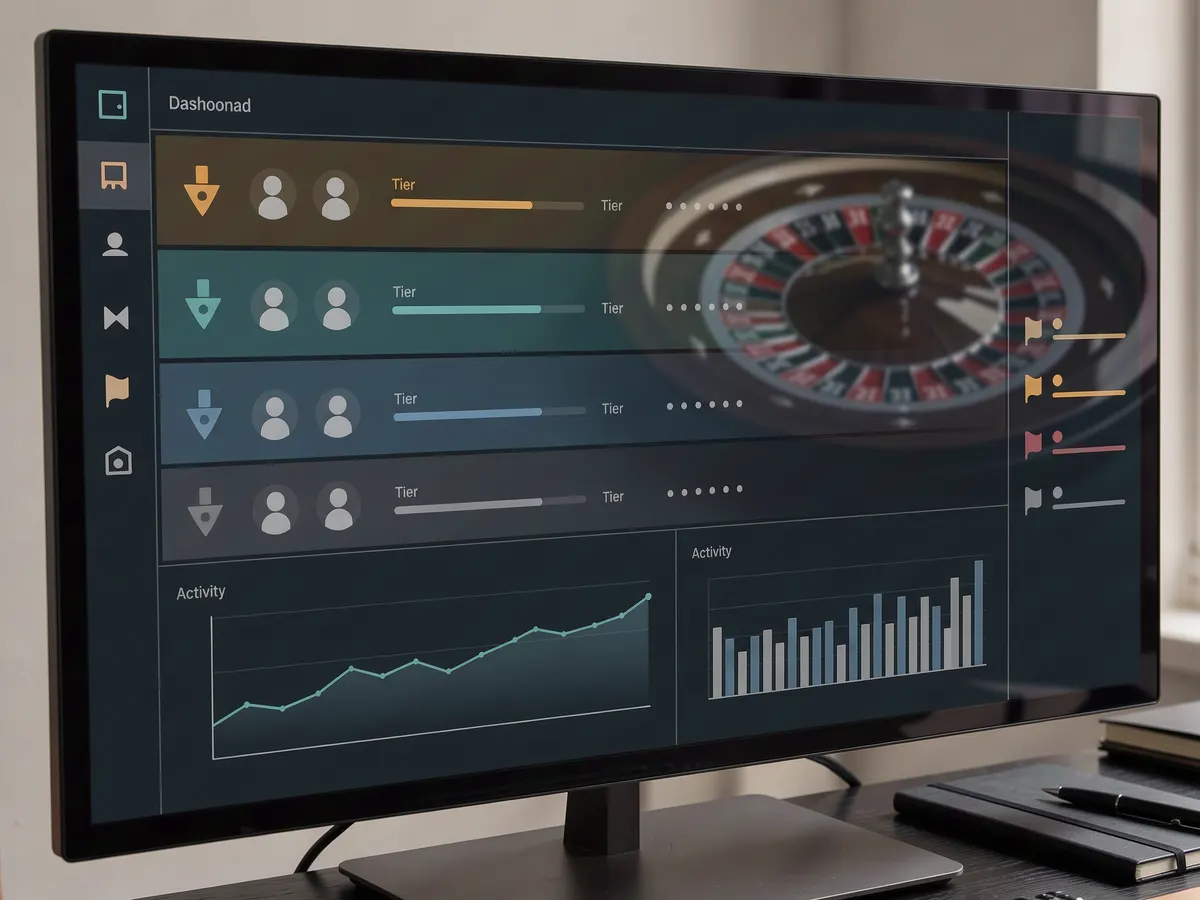
VIP Intelligence is a standalone platform for running a VIP programme end to end, from spotting future high-value players to retaining existing ones. Focus Gaming News reports that it also flags at-risk players before they go inactive, and that a survey by The Playa found 71 per cent of VIP professionals work with data spread across disconnected systems.
That last figure is the real story. VIP teams have historically worked out of spreadsheets, a generic CRM built for e-commerce, and whatever reports the platform provider happened to expose. A host might know a player’s deposit history but not their last support ticket, or see a bonus was granted but not whether it cleared. A dedicated product existing at all tells you the function has grown large enough to justify its own software budget. I would not read it as a sign that VIP management is suddenly fairer. It is a sign that it is becoming measurable, which is a different thing.
How operators decide you are a VIP
Operators segment players on money, frequency and recency, not on how much they enjoy the games. The standard framework is RFM analysis: recency of last session, frequency of play, and monetary value of deposits or turnover. Layer on average bet size, session length, deposit-to-withdrawal ratio and how a player behaves after a losing run, and you have a reasonably accurate forecast of player lifetime value.
The metrics behind player tiering
Most vip casino programs run on tiers, and the tiers come in two shapes. Published tiers are earned by accumulating loyalty points at a disclosed rate, so a player can see exactly what the next level requires. Invite-only tiers are discretionary: a model scores you, a human confirms it, and you get an email. Many operators run both, with the points ladder visible up to a mid level and everything above it handled by invitation.
The scoring inputs are rarely published, which is why two players depositing the same amount can be treated differently. A steady weekly depositor with low volatility preferences and a long account history often scores better than someone who deposits the same total in one weekend and vanishes. Churn prediction matters as much as spend: the systems look for behaviour changes, such as a sudden drop in session frequency, and tell someone to intervene.
What a VIP host actually does
A VIP host is a retention manager with a relationship attached. The day-to-day work is contacting assigned players, approving discretionary bonuses or cashback, escalating withdrawal and KYC problems, arranging event invitations, and recording what each player responds to. A good host genuinely does make an account easier to run, because they can bypass queues and authorise exceptions a general support agent cannot.
They are also paid to keep you playing. Both things are true at once, and a player who forgets the second one tends to interpret attention as friendship. Regulated operators additionally require hosts to act on responsible gambling flags, which can mean a host raising affordability checks or pausing promotions for a player whose activity pattern has changed sharply.
Spreadsheets versus purpose-built VIP player management tools
The shift to dedicated vip player management tools is about latency, not insight. A spreadsheet-based team can work out who its best players are; it just works it out weeks late, after the player has already drifted. Centralised data, real-time alerts on behaviour changes and automated perk triggers compress that lag from weeks to hours. VIP Intelligence is the current example, with its reported 24-hour detection window and at-risk flagging.
| Capability | Manual tracking / generic CRM | Dedicated VIP platform |
|---|---|---|
| Identifying a high-value player | Days to weeks, after reports are compiled | Within the first day of activity, per the reported detection window |
| Spotting a player about to go inactive | Usually after they have already stopped | Alerted while behaviour is still changing |
| Player data location | Split across disconnected systems for most VIP teams surveyed | Consolidated in one place |
| Perk decisions | Host judgement, inconsistent between players | Rule-based triggers plus host override |
The trade-off is consistency against discretion. Automated triggers mean two similar players get similar treatment, which is an improvement on a host’s memory. They also mean the offer arriving in your inbox was chosen because a model predicted it would work on you specifically, and the timing of that offer is no longer accidental.
What smarter VIP management changes about high roller perks
The high roller perks that genuinely change a player’s experience are operational rather than glamorous. Across the industry, higher tiers typically bring prioritised withdrawal processing, raised deposit and withdrawal limits, a named account manager with a direct contact channel, personalised bonus offers instead of generic site-wide promos, tournament or live event invitations, and occasional comps tied to birthdays or account anniversaries. Land-based groups add room and travel comps; online programmes lean on cashback and faster cashouts.
Better back-end management mostly changes the timing and the fit. Instead of a monthly reload offer sent to everyone, you get an offer shaped around the games you actually play and delivered when the system thinks you are most likely to return. Instead of a withdrawal query sitting in a general queue, a host sees it flagged. Worth being clear about the limits: none of this touches the underlying maths. A VIP player on a 96% RTP slot faces the same 4% house edge as anyone else, and cashback reduces the rate at which a bankroll declines without reversing the direction. There is no tier that makes a negative-expectation game positive.
Casino loyalty rewards: points, cashback and what a tier is really worth
Most casino loyalty rewards convert turnover into points at a fixed rate, then let you redeem points for bonus credit, free spins or occasional merchandise, with cashback stated as a percentage of net losses over a defined period. The headline percentage tells you almost nothing on its own. What determines the value is three conditions underneath it.
- Whether cashback is paid as withdrawable cash or as a bonus carrying wagering requirements.
- Game weighting, since slots usually contribute 100% towards any playthrough while table games contribute far less, which changes how fast a reward clears.
- Max cashout and max bet caps that apply while bonus funds are active.
A 10% cashback paid as cash is a real reduction in cost. A 15% cashback paid as a bonus at 30× wagering, with a withdrawal cap, is a marketing number. Data-driven programmes personalise which of these you are offered, so comparing your deal against a friend’s is less useful than it used to be. Read your own terms, every time.
The condition almost nobody checks
Before accepting any VIP offer, check what it does to your withdrawal rights. That is the condition that changes the answer. Players evaluate VIP programmes on perks and hosts, when the clause that actually matters is whether accepting a discretionary bonus locks your existing balance into a playthrough requirement, or whether the tier’s “priority payouts” still sit behind a pending period you cannot shorten.
So here is my position. I would not chase a tier. Increasing your stakes or frequency to reach a threshold costs more than the reward returns in every programme I have seen described publicly, because the threshold is set where it is profitable for the operator. Accepting a tier you reached anyway is reasonable. Playing towards one is not.
The other thing to hold in mind as these systems get sharper: a platform that can detect your value within 24 hours can also time its contact around your behaviour, including after losses. Regulated markets require operators to monitor for harm indicators alongside value indicators, and the same data supports both. Use the tools that sit on your side of that equation, such as deposit and loss limits, session reminders and cool-off periods, and treat a sudden increase in attention from an operator as information about your own play volume. VIP status reflects how much you have wagered, nothing more. If you want background on how operator-side tracking technology works more generally, our piece on the new wave of casino loyalty kiosks covers the land-based equivalent.
Judge a programme on three readable things: whether tier criteria are published, whether cashback is cash, and how long a withdrawal actually takes at your current level compared with the tier above. If an operator will not tell you the first, the rest is guesswork. Gambling should be funded from money you can afford to lose, and support is available through services such as GambleAware if play stops feeling optional. The minimum legal gambling age varies by jurisdiction, commonly 18 or 21 depending on your state or country and the type of gambling, so check the rules that apply where you are.
About The Author